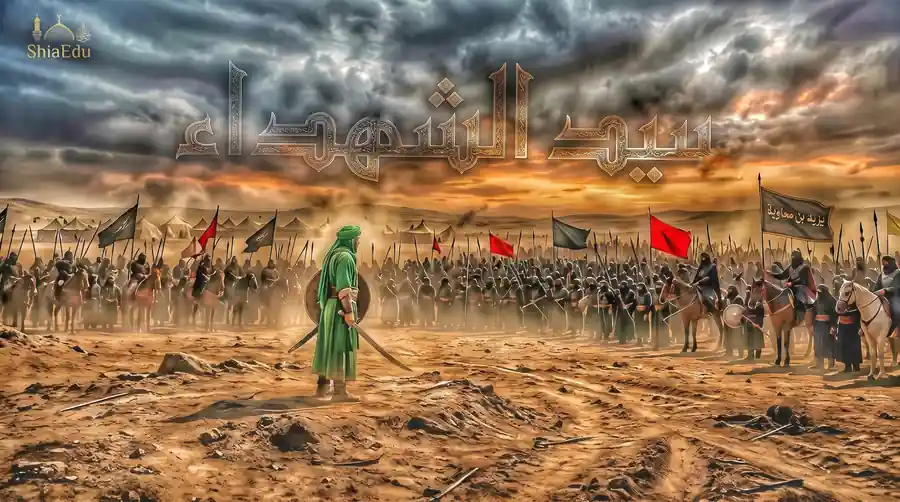
Ashura is the tenth day of Muharram, the first month of the Islamic calendar. On this day in 61 AH (680 CE), Imam Husain ibn Ali (A.S.), the grandson of the Holy Prophet Muhammad (S.A.W.W.), was martyred at Karbala in Iraq along with his family and companions. Shia Muslims do not celebrate Ashura. For us it is the saddest day of the year. It is the day Muharram is built around, when we remember Imam Husain, weep for him and promise again to stand with the truth, whatever it costs.
This guide tells the story of Karbala in order. It starts with the reasons Imam Husain left Madinah and goes through to the captivity of his family and the first Arba'een. After that we look at why Shia Muslims mourn, what Karbala means spiritually, what it still teaches us, and the reward the Imams of the Ahlulbayt (A.S.) promised for Ziyarat Ashura and for visiting the shrine of Imam Husain. The narrations come from the main Shia books: Kamil al-Ziyarat, al-Amali of Shaykh al-Saduq, al-Irshad of Shaykh al-Mufid and al-Luhuf of Sayyid Ibn Tawus. Two hadiths come from Sahih al-Bukhari and Sunan al-Tirmidhi.
- What Ashura Means
- Who Was Imam Husain (A.S.)?
- Why Imam Husain Rose Against Yazid
- From Madinah to Karbala
- The Days Before Ashura
- What Happened at Karbala on the Day of Ashura
- After Ashura: Captivity and Arba'een
- Why Shia Muslims Mourn in Muharram
- The Spiritual Dimension of Karbala
- What We Learn from Karbala
- Ziyarat Ashura and Its Reward
- The Reward of Visiting the Shrine of Imam Husain
- Observing Muharram at Home
- Frequently Asked Questions
What Ashura Means
The word Ashura comes from the Arabic 'ashara, meaning "ten", so it is simply the name of the tenth day of Muharram. Long before Islam, Muharram was one of the four sacred months, when even the Arabs of the Jahiliyya put down their swords. That is part of what made the killing of the Prophet's grandson in this month so shocking. Imam Ali al-Ridha (A.S.) put it this way to his companion Ibrahim ibn Abi Mahmud:
"Muharram is the month in which the people of the Jahiliyya forbade fighting, yet our blood was made lawful in it, our sanctity was violated, our children and women were taken captive, and fire was set to our tents... The day of Husain wounded our eyelids and made our tears flow. So let those who weep, weep for one like Husain, for weeping for him removes great sins."
Shaykh al-Saduq, al-Amali, Majlis 27, hadith 2. The Imam added that when Muharram began, his father Imam Musa al-Kazim (A.S.) was never seen laughing until the tenth day, which was his day of grief and mourning.Not every Muslim keeps the day like this. Many Sunni Muslims fast on Ashura, following reports in their books that link it with the Prophet Musa (A.S.), and in some places it has been marked as a day of blessing, with new clothes, kohl, special dishes and festivities. Ziyarat Ashura, taught by Imam Muhammad al-Baqir (A.S.), names the people who first made it a happy day.
اللَّهُمَّ إِنَّ هٰذَا يَوْمٌ تَبَرَّكَتْ بِهِ بَنُو أُمَيَّةَ ... وَهٰذَا يَوْمٌ فَرِحَتْ بِهِ آلُ زِيَادٍ وَآلُ مَرْوَانَ بِقَتْلِهِمُ الْحُسَيْنَ
"O Allah, this is a day that the Banu Umayya took as blessed... and this is a day on which the family of Ziyad and the family of Marwan rejoiced, because they had killed Husain."
Shaykh al-Tusi, Misbah al-Mutahajjid, the text of Ziyarat Ashura narrated by 'Alqama from Imam al-Baqir (A.S.).Imam al-Ridha (A.S.) warned that anyone who treats Ashura as a day of blessing and stores up provisions in his house will find no blessing in them, while whoever makes it a day of grief and weeping, Allah will make the Day of Resurrection a day of joy for him (al-Amali, Majlis 27, hadith 4). Even Ibn Taymiyya, a Sunni scholar nobody would call a friend of the Shia, ruled that the reports about kohl, ghusl and celebrating on Ashura are fabricated, and traced the festive customs back to people in Kufa who were hostile to Imam Husain (Majmu' al-Fatawa, volume 25). The reader can judge which way of keeping the day is closer to the Prophet, who wept for Husain years before Karbala.
Shia Muslims do not fast on Ashura. The Imams discouraged it, and most Shia jurists regard fasting on that day as disliked (makruh). What Shia Muslims do instead is go without food and water until the afternoon as an act of grief, with no intention of fasting, and then break it with a little water. Shaykh al-Tusi records this from Imam Ja'far al-Sadiq (A.S.) in Misbah al-Mutahajjid. For the details, follow your Marja'. We look at the other differences between Shia and Sunni practice in a separate guide.
Who Was Imam Husain (A.S.)?
Imam Husain was born in Madinah on 3 Sha'ban, 4 AH. He was the second son of Imam Ali (A.S.) and Lady Fatima al-Zahra (S.A.), the younger brother of Imam Hasan (A.S.) and the third Imam of the Ahlulbayt. He is one of the five People of the Cloak, about whom the verse of purification (33:33) came down, and nine of the twelve Imams are his descendants, the last of them Imam al-Mahdi (A.T.F.S.). Each of them has a short biography in our guide to the 14 Masomeen and the 12 Imams.
Every Muslim school has recorded how much the Prophet loved him. Here is one saying, from Sunan al-Tirmidhi:
حُسَيْنٌ مِنِّي وَأَنَا مِنْ حُسَيْنٍ، أَحَبَّ اللَّهُ مَنْ أَحَبَّ حُسَيْنًا
"Husain is from me and I am from Husain. Allah loves whoever loves Husain."
Sunan al-Tirmidhi, Book of Virtues, chapter on the virtues of al-Hasan and al-Husain, hadith 3775, narrated by Ya'la ibn Murra. Al-Tirmidhi called it hasan; Zubair Ali Za'i graded it hasan. Ibn Qulawayh records the same words in Kamil al-Ziyarat, chapter 14, hadith 11.The first half is easy to follow: Husain was his grandson. The second half, "I am from Husain", goes much deeper. Shia scholars read it as a prophecy that the religion the Prophet brought would survive because of Husain's sacrifice. Imam Ali (A.S.) also narrated that the Prophet told him Allah had commanded him to love Hasan and Husain, and to love whoever loves them (Kamil al-Ziyarat, chapter 14, hadith 1).
And the Prophet knew what was coming. Kamil al-Ziyarat gives whole chapters to the reports that the angel Jibrail told him his grandson would be killed by people of his own Ummah, and brought him soil from Karbala, which he handed to Umm Salama to keep (chapters 16 and 17). The Prophet was weeping for Husain long before Karbala happened.
Why Imam Husain Rose Against Yazid
After Imam Ali was martyred in 40 AH, Imam Hasan (A.S.) signed a peace treaty with Mu'awiya ibn Abi Sufyan. One of its main terms was that Mu'awiya would not name a successor. He broke it. From around 56 AH he was taking pledges of allegiance for his son Yazid, a man known for drinking, open sin and mocking the religion. This is where the old argument over Imamat and Khilafat stopped being theory. When Mu'awiya died in Rajab 60 AH, Yazid wrote straight away to his governor in Madinah, al-Walid ibn 'Utba, telling him to take Imam Husain's pledge without delay (al-Irshad, al-Mufid).
Al-Walid called the Imam to him at night, with Marwan ibn al-Hakam sitting at his side. The Imam's reply is still quoted in every majlis:
وَمِثْلِي لَا يُبَايِعُ مِثْلَهُ
"We are the household of prophethood, the treasury of the message... and Yazid is a sinful man, a drinker of wine and a killer of innocent souls, who sins openly. One like me does not pledge allegiance to one like him."
Sayyid Ibn Tawus, al-Luhuf; also Bihar al-Anwar, volume 44.Had the grandson of the Prophet pledged allegiance, the whole Ummah would have taken it to mean that a man who broke the laws of Islam in public was its rightful leader. Before he left Madinah, the Imam wrote a will and gave it to his brother Muhammad ibn al-Hanafiyya. In it he explained, for anyone who would ever ask, why he was going:
إِنِّي لَمْ أَخْرُجْ أَشِراً وَلَا بَطِراً وَلَا مُفْسِداً وَلَا ظَالِماً، وَإِنَّمَا خَرَجْتُ لِطَلَبِ الْإِصْلَاحِ فِي أُمَّةِ جَدِّي
"I have not risen out of pride or arrogance, nor to cause corruption or to oppress. I have risen only to seek reform in the Ummah of my grandfather. I wish to command what is good and forbid what is evil, and to follow the way of my grandfather and my father, Ali ibn Abi Talib."
Allama al-Majlisi, Bihar al-Anwar, volume 44, page 329.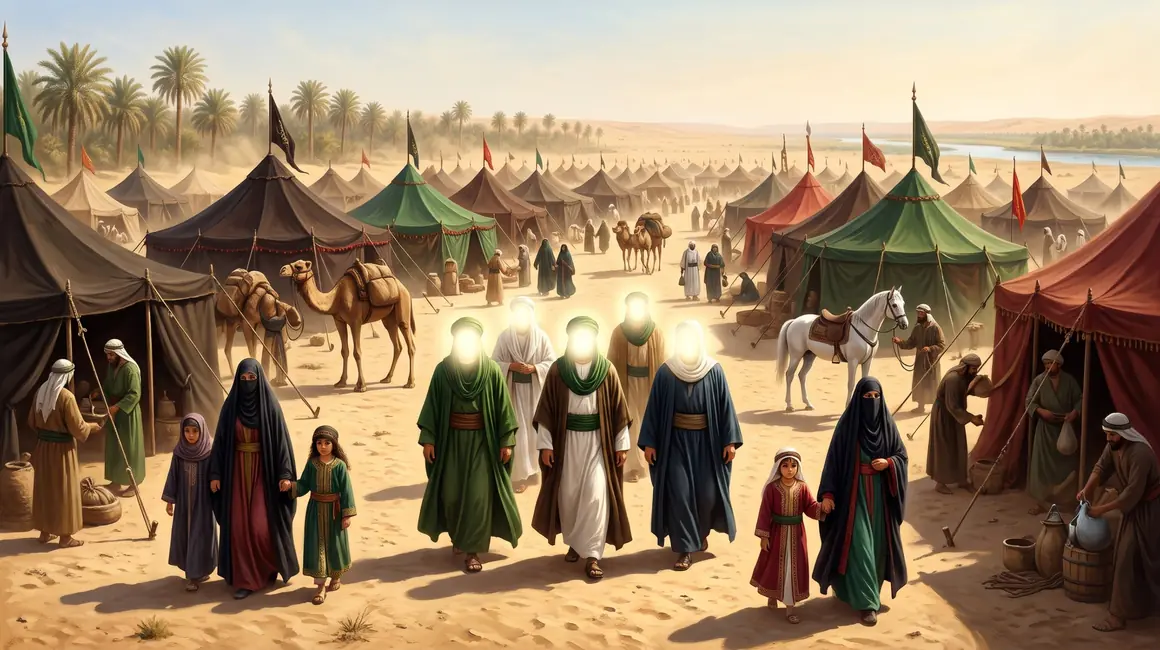
Read that will and the rest of Karbala makes sense. Imam Husain did not go out for power, money or revenge. He went out to reform the Ummah of his grandfather. He was carrying out amr bil ma'ruf wa nahi 'anil munkar, commanding good and forbidding evil, a duty every Shia child learns among the practical pillars of Shia Islam, the Furoo-e-Deen.
From Madinah to Karbala
The Imam left Madinah on 28 Rajab, 60 AH. With him went his sisters, Lady Zainab (S.A.) among them; his brothers, Hazrat Abbas (A.S.) among them; his sons Ali Akbar and Ali, who would later be Imam Zain al-Abideen (A.S.); his nephew Qasim; and the women and children of the family. The night before, he went to his grandfather's grave to say goodbye. He did not slip away by back roads. He reached Makkah on 3 Sha'ban (al-Irshad).
He stayed in Makkah for four months, and people came to see him from everywhere. From Kufa the letters kept coming: "We have no Imam. Come to us, and perhaps Allah will unite us on the truth through you." Shaykh al-Mufid says one messenger alone brought about 150 letters, and Sayyid Ibn Tawus writes that in the end there were some 12,000. The Imam sent his cousin Muslim ibn 'Aqil (A.S.) ahead to find out whether Kufa meant what it wrote. Thousands pledged allegiance to Muslim, and he wrote back telling the Imam to come (al-Irshad).
Then Yazid made 'Ubaydullah ibn Ziyad governor of Kufa. With spies, threats and bribes, Ibn Ziyad pulled the movement apart. Muslim's host, the old chief Hani ibn 'Urwa, was arrested, the tribal leaders scared people back into their homes, and by nightfall Muslim was walking the streets of Kufa alone. He and Hani were martyred on 9 Dhu al-Hijja, 60 AH (al-Irshad).
The Imam had already left Makkah. Yazid's men were planning to kill him there, even in the middle of Hajj, so to protect the sanctity of the Haram he performed an Umrah and set out for Iraq on 8 Dhu al-Hijja, the day before the pilgrims went to Arafat. On the road he met the poet al-Farazdaq coming from Kufa, who told him: "Their hearts are with you, but their swords are against you" (al-Irshad). At Zarud, Zuhayr ibn al-Qayn, who had been avoiding him, came to his tent. He walked out a different man and became one of his most devoted companions.
When news of Muslim's death reached the caravan, the Imam told everyone they were free to go, and many who had joined in hope of an easy win went. Near Sharaf the road was blocked by about 1,000 horsemen under al-Hurr ibn Yazid al-Riyahi. Men and horses were worn out and thirsty, and the Imam told his young men to give water to every soldier and every horse. Hurr had orders to bring the Imam to Ibn Ziyad. The Imam refused, and in the end they took a road that led neither to Kufa nor back to Madinah, with Hurr's men riding alongside (al-Irshad).
On 2 Muharram, 61 AH, the caravan stopped. The Imam asked what the place was called. "Karbala," they said. He said it was a land of karb (anguish) and bala' (trial), and told them to set up camp (al-Amali, al-Saduq; al-Irshad).
| Date | What happened |
|---|---|
| Rajab 60 AH | Death of Mu'awiya; Yazid demands Imam Husain's allegiance |
| 28 Rajab 60 AH | The Imam leaves Madinah with his family |
| 3 Sha'ban 60 AH | He reaches Makkah; the letters of Kufa begin to arrive |
| Ramadan 60 AH | Muslim ibn 'Aqil is sent to Kufa |
| 8 Dhu al-Hijja 60 AH | The Imam leaves Makkah for Iraq |
| 9 Dhu al-Hijja 60 AH | Muslim ibn 'Aqil and Hani ibn 'Urwa are martyred in Kufa |
| Dhu al-Hijja 60 AH | Hurr's army blocks the Imam's way near Sharaf |
| 2 Muharram 61 AH | The caravan arrives at Karbala |
The Days Before Ashura
'Umar ibn Sa'd arrived on 3 Muharram with 4,000 soldiers. Ibn Ziyad had promised him the governorship of Rayy if he fought the Imam. More troops came every day after that. The reports disagree on how big the army finally was, but they all agree on the picture: many thousands surrounding a few dozen.
On 7 Muharram, Ibn Ziyad ordered guards on the Euphrates so that not one drop of water would reach the Imam's camp. Hazrat Abbas (A.S.) led a small group to the river one night and came back with some waterskins (al-Irshad). After that the women, the children and the men suffered a terrible thirst in the heat of the Iraqi plain.
On the 9th, the day called Tasu'a, Shimr ibn Dhi al-Jawshan rode in with harsh new orders from Ibn Ziyad. Hazrat Abbas's mother, Umm al-Banin, came from Shimr's tribe, so Shimr offered "safety" to Abbas and his brothers. Abbas replied: "May Allah curse you and your offer of safety! Do you offer us safety while the son of the Messenger of Allah has none?" (al-Irshad). That evening the army started moving to attack. The Imam sent Abbas to ask them for one more night, so he could spend it in prayer, supplication, seeking forgiveness and reciting the Quran.
That night, the night of Ashura, the Imam called his companions together and said:
"I know of no companions more loyal or better than my companions, and no family more righteous and more caring than my family. May Allah reward you all with good on my behalf... These people want no one but me. The night has covered you, so take it as a camel to ride, and go."
Shaykh al-Mufid, al-Irshad, the events of the night of Ashura.Not one of them left. Hazrat Abbas was the first to answer: "Should we leave you so that we may live after you? May Allah never show us that day." Muslim ibn 'Awsaja said that if his weapons ran out he would fight with stones. Zuhayr said he would gladly be killed a thousand times over if it kept the Imam and his family safe (al-Irshad). Sayyid Ibn Tawus writes that all night their prayer and Quran rose from the tents like the humming of bees (al-Luhuf).
What Happened at Karbala on the Day of Ashura
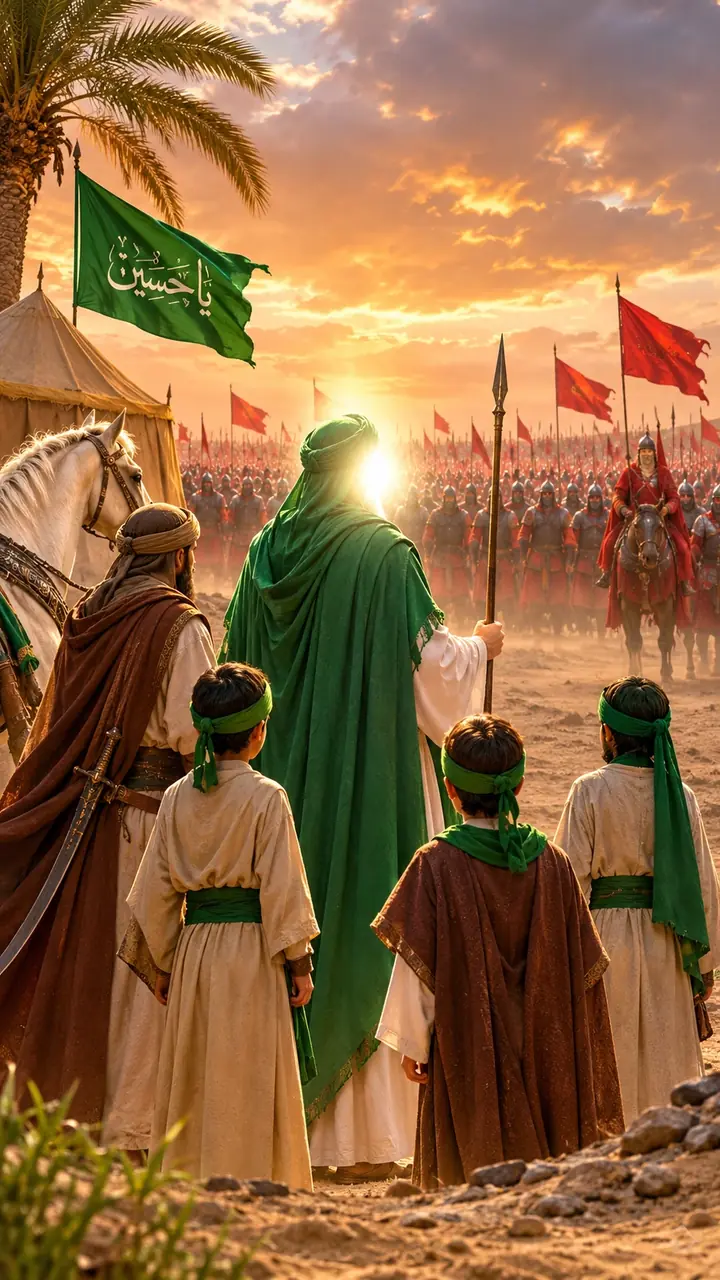
The Imam led the dawn prayer and then set out his small force: Zuhayr ibn al-Qayn on the right, Habib ibn Mazahir on the left, and the banner in the hands of his brother Abbas. Then he rode out and spoke to the army that had come to kill him. He reminded them who he was: "Do you know that my grandfather is the Messenger of Allah? That my mother is Fatima, his daughter? That my father is Ali ibn Abi Talib? That this is the sword and the turban of the Messenger of Allah?" They said yes to every question. "Then why do you make my blood lawful?" (al-Amali, al-Saduq, Majlis 30).
Hurr turns back to the truth
Hurr ibn Yazid, the commander who had blocked the Imam's road, went to 'Umar ibn Sa'd and asked whether he really meant to fight this man. "Yes," said Ibn Sa'd, "a fight in which heads and hands will fall." Hurr started to shake. A man next to him, who had always thought Hurr the bravest man in Kufa, asked what was wrong. Hurr told him: "I am giving myself the choice between Paradise and the Fire, and by Allah I will choose nothing over Paradise, even if I am cut to pieces and burned" (al-Irshad). He rode slowly over to the Imam's camp with his head down and asked whether there could be repentance for someone like him. The Imam told him Allah accepts his repentance. Hurr asked to be the first to fight, since he had been the first to block the way. When he fell, the Imam wiped the dust off his face and said: "You are free (hurr), as your mother named you, free in this world and in the Hereafter" (al-Irshad; al-Amali, al-Saduq).
The companions
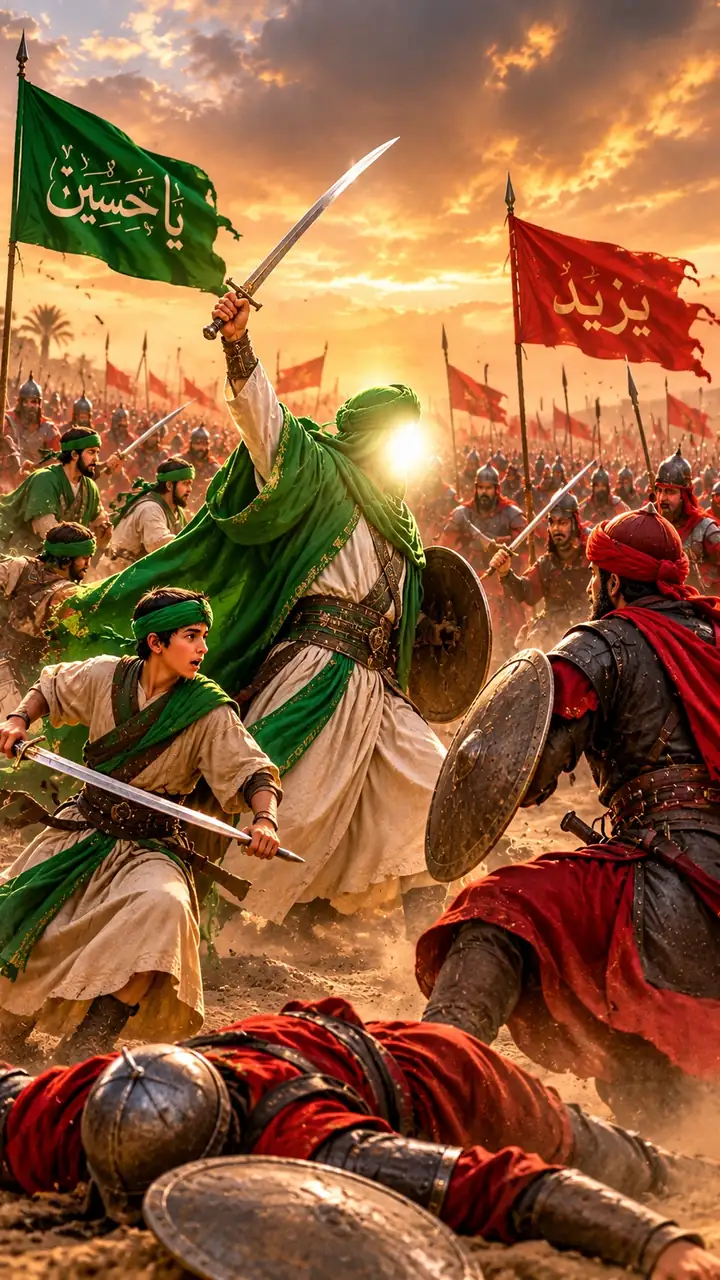
'Umar ibn Sa'd shot the first arrow and called on his men to witness that he had been first (al-Irshad). One by one, with the Imam's permission, his companions went out, about 72 of them in most reports. Habib ibn Mazahir was an old man who had been a companion of the Prophet and of Imam Ali. Muslim ibn 'Awsaja, as he lay dying, pointed to the Imam and told Habib, "I advise you to give your life for him." Burayr ibn Khudayr was the great Quran reciter of Kufa. Jawn, a freed slave of Abu Dharr, was honoured with the Imam's own prayer. Wahb was a young man who had been a Christian and had become Muslim with his mother (al-Irshad; al-Amali, al-Saduq; al-Luhuf).
At midday, with the fighting still going on, the companion Abu Thumama al-Saydawi reminded the Imam that it was time for Zuhr. The Imam looked up at the sky and said, "You have remembered the prayer; may Allah make you among those who pray." He led the Zuhr prayer on the battlefield, while Sa'id ibn Abdullah al-Hanafi stood in front of him and took the arrows on his own body until he fell (al-Luhuf).
The Banu Hashim
Once every companion had been martyred, the men of the Imam's own family went out. The first was his son Ali Akbar, the young man who looked, behaved and spoke more like the Prophet than anyone. As he rode out, the Imam lifted his eyes to the sky: "O Allah, be witness: a young man has gone out to them who is the most like Your Messenger in his appearance, his character and his speech" (al-Luhuf). Ali Akbar fought, came back once faint with thirst, went out again and was martyred. Lady Zainab's sons, Awn and Muhammad, fell, and so did the sons of 'Aqil. Qasim, the young son of Imam Hasan, had not yet come of age. He begged his uncle again and again until he was allowed to go, and when he fell the Imam carried him back to the tents in his arms (al-Irshad).
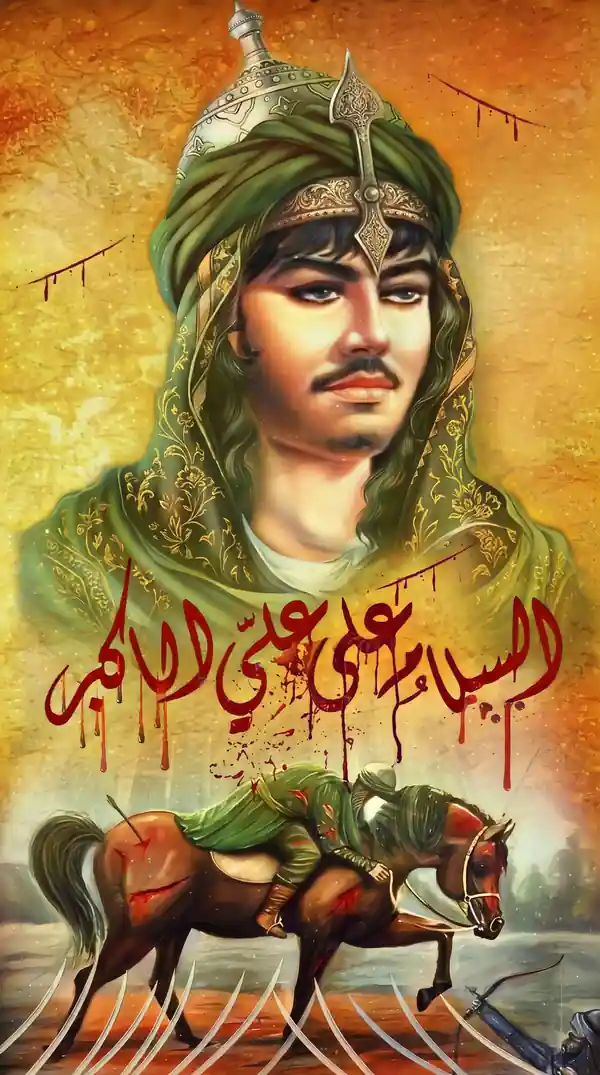
Hazrat Abbas and the water
Hazrat Abbas (A.S.) first sent his three younger brothers, the sons of Umm al-Banin, into the field, and watched all three of them fall (al-Irshad). Then he went to his brother and asked for permission to fight. Imam Husain did not send him to fight. He sent him for water, because the children were crying with thirst. Abbas obeyed without a word, and that obedience says more about him than any battle could. He was the standard-bearer, the strongest man left in the camp and the one the enemy feared most. Had he gone out to fight, the day might have looked very different. But his Imam asked him for water, so he went for water.
He fought his way through to the Euphrates and filled the waterskin. He scooped up some water in his hand, then remembered how thirsty his brother and the children were, and let it run through his fingers without drinking. On the way back nobody dared face him. Men hid behind the palm trees along the river and struck at him from behind, first his right arm and then his left. He held the waterskin in his teeth until an arrow pierced it and the water ran into the sand. When he fell, the Imam came to him and said: "Now my back is broken, and my means are few." His shrine stands by the river, a short walk from his brother's. The core of the account is in al-Irshad; the rest of the details recited in majalis are in al-Manaqib of Ibn Shahrashub and the maqtal narrations collected in Bihar al-Anwar, volume 45.
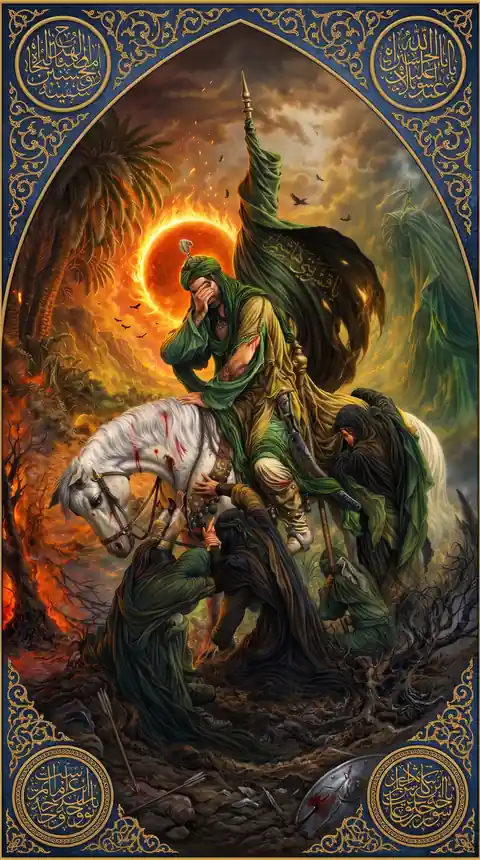
The Imam alone
Now the Imam was standing almost alone, and he called out: "Is there anyone who will help us?" (al-Luhuf). He carried his baby son Abdullah, known as Ali Asghar, toward the army and asked for a little water for him. Hurmala ibn Kahil answered with an arrow, and the baby was martyred in his father's arms. The Imam caught the blood in his palm, threw it toward the sky and said: "What has befallen me is made easy because it is before the eyes of Allah" (al-Luhuf).
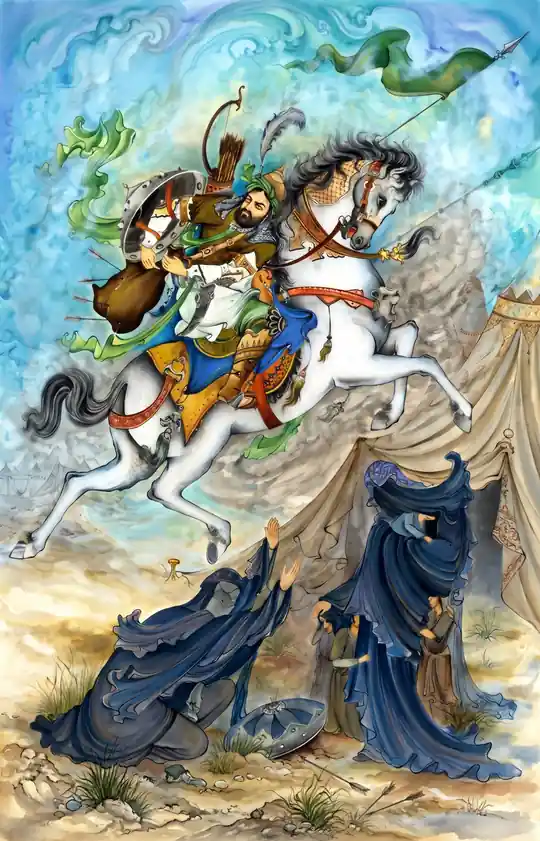
He said goodbye to the women and children and to his sister Lady Zainab (S.A.). His son Ali, Imam Zain al-Abideen (A.S.), was too ill to fight, and through him Allah kept the line of the Imams alive. Then the Imam turned to face the army. A narrator who was there said he had never seen a man who had lost his sons, family and companions stand so firm or fight so bravely (al-Irshad). Earlier that day he had said to them the words every Shia knows by heart:
هَيْهَاتَ مِنَّا الذِّلَّةُ
"The illegitimate son of the illegitimate has left me between two choices: the sword or humiliation. And far is humiliation from us! Allah refuses it for us, and His Messenger, and the believers."
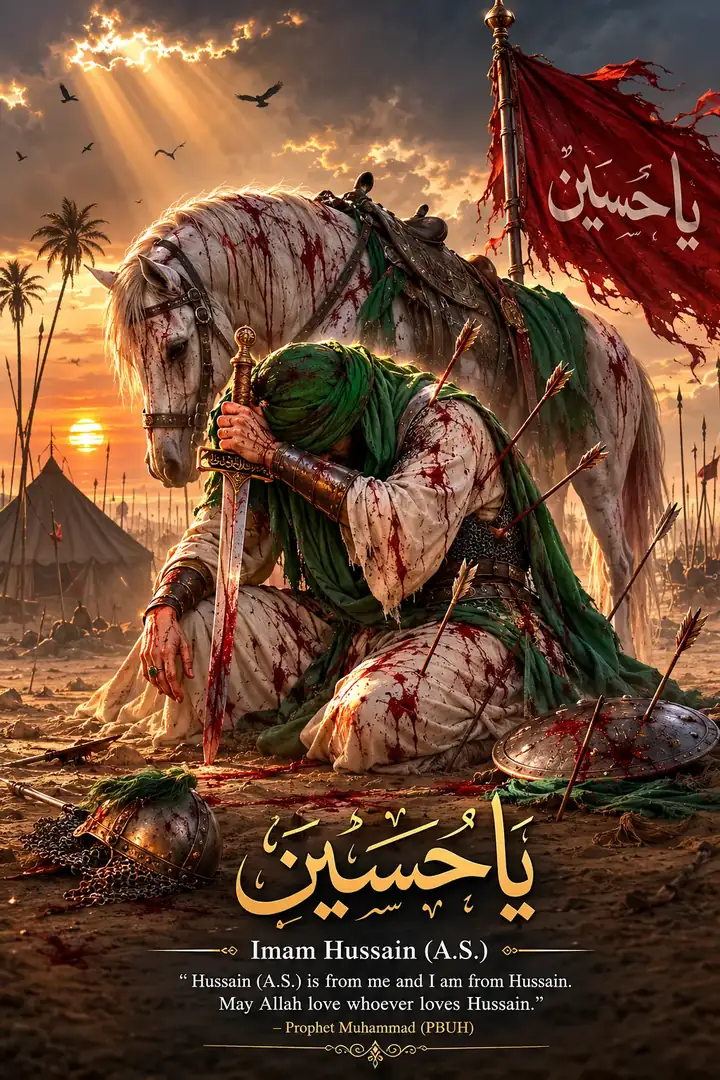
Sayyid Ibn Tawus, al-Luhuf; also Tuhaf al-'Uqul and al-Ihtijaj.Arrows, spears and swords brought him down from his horse onto the earth of Karbala. Imam Husain (A.S.) was martyred in the late afternoon of 10 Muharram, 61 AH. His blessed head was cut off and sent to Ibn Ziyad, and his horse came back to the tents without its rider, which is how the women knew (al-Amali, al-Saduq). Imam al-Ridha (A.S.) said 18 men of his own household were killed with him, "the like of whom are not to be found on the earth" (al-Amali, Majlis 27, hadith 5).
After Ashura: Captivity and Arba'een
That evening the army stormed the tents, looted them and set them on fire. Lady Zainab gathered the terrified children and shielded her sick nephew. Shia Muslims remember that night as Sham-e-Ghariban, the night of the strangers. Fatima bint al-Husain later remembered a man tearing the anklets from her feet while he wept. When she asked him why he was crying, he said: "How can I not weep when I am robbing the daughter of the Messenger of Allah?" (al-Amali, al-Saduq, Majlis 31).
On 11 Muharram the women and children of the Prophet's family were put on bare camels and taken to Kufa, with the heads of the martyrs carried ahead of them on spears. In the Kufa market Lady Zainab silenced the crowd and spoke until people were weeping over what they had done. In the palace, Ibn Ziyad taunted her: "How did you see what Allah did to your brother and your family?" She replied:
مَا رَأَيْتُ إِلَّا جَمِيلاً
"I saw nothing but beauty. They were a people for whom Allah had written martyrdom, and they went out to their resting places. Allah will gather you and them, and you will be questioned and argued against."
Sayyid Ibn Tawus, al-Luhuf.When Ibn Ziyad ordered Imam Zain al-Abideen to be killed, Lady Zainab threw her arms around him and said they would have to kill her too, and Ibn Ziyad let him go (al-Irshad). The captives were then taken to Damascus, arriving on 1 Safar according to many reports. In his court Yazid struck the lips of the Imam's head with a cane. Lady Zainab stood up in front of him and gave a sermon that ended: "By Allah, you will never erase our remembrance, and you will never kill our revelation" (al-Luhuf; al-Ihtijaj). In the great mosque, Imam Zain al-Abideen introduced himself as the son of Makkah and Mina, of Zamzam and Safa, of Muhammad al-Mustafa, and kept going until the people were in tears (al-Manaqib, Ibn Shahrashub).
The killing shook even companions of the Prophet who had never followed the Ahlulbayt. Sahih al-Bukhari records that a man from Iraq asked Abdullah ibn Umar whether a pilgrim in ihram is allowed to kill a fly. Ibn Umar answered:
أَهْلُ الْعِرَاقِ يَسْأَلُونَ عَنِ الذُّبَابِ، وَقَدْ قَتَلُوا ابْنَ ابْنَةِ رَسُولِ اللَّهِ ﷺ، وَقَالَ النَّبِيُّ ﷺ: هُمَا رَيْحَانَتَايَ مِنَ الدُّنْيَا
"The people of Iraq ask about flies, when they have killed the son of the daughter of the Messenger of Allah! And the Prophet said: 'They (Hasan and Husain) are my two sweet basils of this world.'"
Sahih al-Bukhari, Book of the Companions, chapter on the virtues of al-Hasan and al-Husain, hadith 3753.As word spread, Yazid grew afraid of how angry people were. He blamed Ibn Ziyad and let the family go, and they went back to Madinah. On 20 Safar, forty days after Ashura, the blind companion Jabir ibn Abdullah al-Ansari reached Karbala with his student 'Atiyya. He bathed in the Euphrates, walked to the grave remembering Allah, and called out "Ya Husain" three times. He was the first pilgrim of Arba'een (Bisharat al-Mustafa; Bihar al-Anwar, volume 98). Imam Hasan al-Askari (A.S.) later named the Ziyarat of Arba'een as one of the five signs of a believer (Tahdhib al-Ahkam). The ziyarah Imam al-Sadiq (A.S.) taught for that day is on our page for Ziyarat Arbaeen with English and Urdu, and if your family is thinking of making the journey, read our practical guide to the Arbaeen walk.
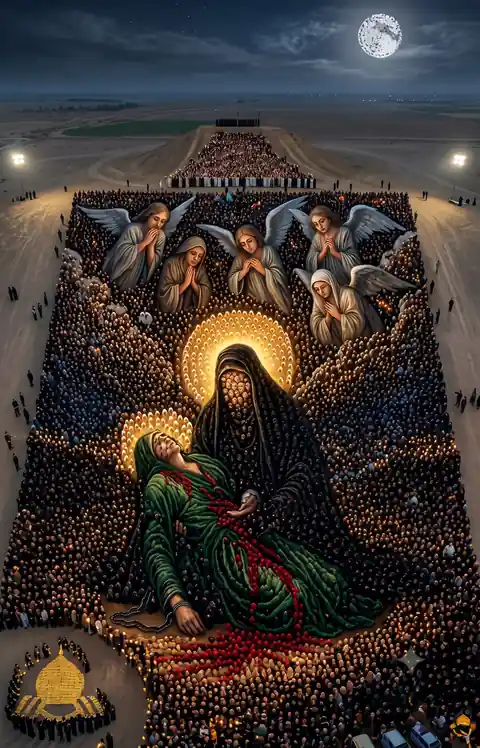
Imam Zain al-Abideen wept for his father for the rest of his life; Kamil al-Ziyarat has a whole chapter on his weeping (chapter 35). Yazid died in 64 AH, about three years after Karbala, and within a few years al-Mukhtar al-Thaqafi had punished most of the men who fought there. If you want to tell these events to your children, our book Karbala: the story of Imam Husain (A.S.) goes through them chapter by chapter.
Why Shia Muslims Mourn in Muharram
People sometimes ask why Shia Muslims still cry over something that happened fourteen hundred years ago. The simple answer is that the Prophet and the Imams cried for Husain, taught their followers to cry for him, and promised a great reward for it. On the first day of Muharram, Imam al-Ridha (A.S.) said to his companion al-Rayyan ibn Shabib:
"O son of Shabib, if you weep for anything, then weep for Husain ibn Ali ibn Abi Talib, for he was slaughtered as a ram is slaughtered... If you weep for Husain until your tears flow onto your cheeks, Allah will forgive every sin you have committed, small or great, little or much... If you would like to have the reward of those who were martyred with Husain, then whenever you remember him, say: 'How I wish I had been with them, so that I would have attained a great victory.'"
Shaykh al-Saduq, al-Amali, Majlis 27, hadith 5; also 'Uyun Akhbar al-Ridha.Imam Husain himself said: "I am the martyr of tears. No believer remembers me without weeping" (Kamil al-Ziyarat, chapter 36, hadith 3, narrated by Imam al-Sadiq). Imam Ja'far al-Sadiq (A.S.) taught that "all weeping and grief is disliked for a servant of Allah except weeping and grief for Husain ibn Ali, for that is rewarded" (chapter 32, hadith 2). He said that if a tear no bigger than a fly's wing falls when Husain is mentioned, Allah Himself will reward it, and will accept nothing less than Paradise for that person (chapter 32, hadith 3). Imam Zain al-Abideen (A.S.) said that a believer whose tear runs down his cheek for Husain will be given rooms in Paradise to live in for ages (chapter 32, hadith 1). His companions said Imam al-Sadiq was never seen smiling on a day Husain had been mentioned to him, until night fell (chapter 32, hadith 5).
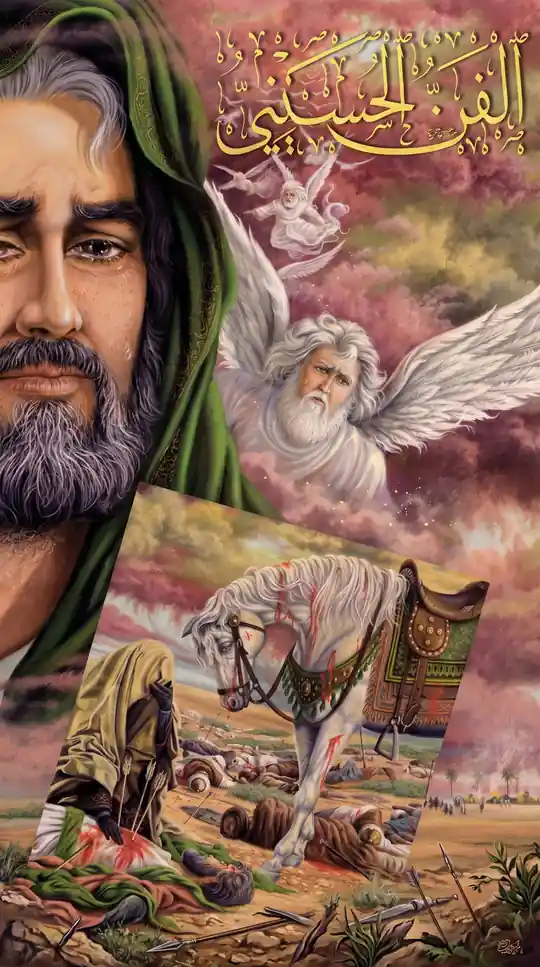
So 'azadari, mourning for Imam Husain, is a sunna of the Prophet and the Imams, and the way the message of Karbala has been kept alive for fourteen centuries. It would be a mistake to call it a cultural habit. In Muharram, Shia communities hold majalis, where scholars explain the Quran and the history of Karbala and reciters read elegies. They walk in processions, beat their chests in matam, serve water and food in the Imam's name and visit his shrine. Imam al-Sadiq (A.S.) said that whoever gives people water at Husain's grave on the day of Ashura is like someone who gave water to the people of his camp (Kamil al-Ziyarat, chapter 71, hadith 5). For the rulings on any particular form of mourning, follow your Marja'.
The mourning does not stop on the 10th. For Shia Muslims it runs from the moon of Muharram all the way through Safar, up to 28 Safar, the day of the passing of the Holy Prophet (S.A.W.W.) and the martyrdom of Imam Hasan (A.S.). Shia families do not celebrate anything in these weeks. You will not find a Shia wedding in this period, and birthdays, parties and other happy occasions wait until the season of grief is over. Every date in this season is set out in our book Islamic Months and Holy Days.
The Spiritual Dimension of Karbala
Karbala is usually told as a story of politics and war, and it was both. But for the people who stood with Imam Husain it was first of all a journey to Allah, and every step of it was worship.
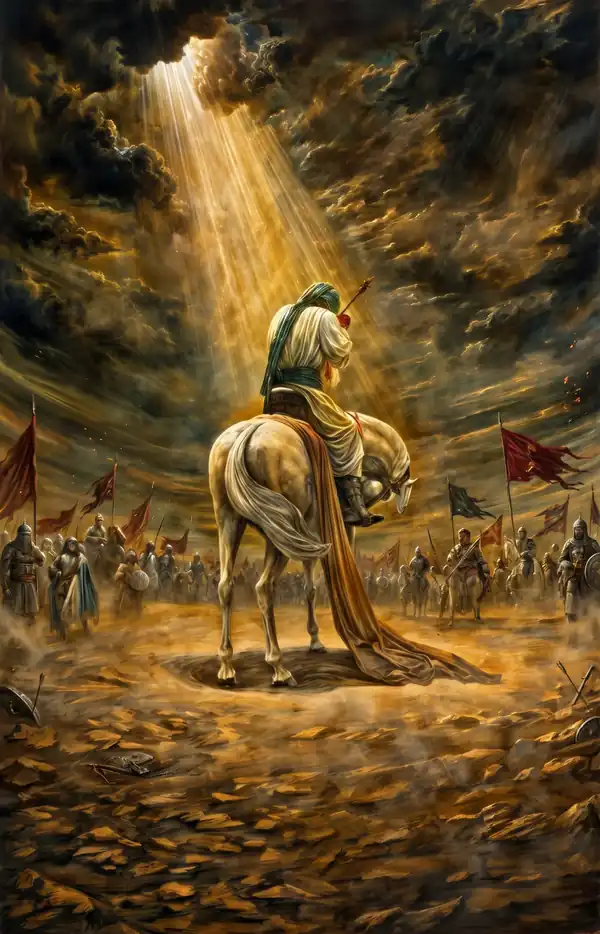
Certainty. At Qasr Bani Muqatil, on the road to Karbala, the Imam woke from a short sleep saying, "We belong to Allah and to Him we return." Ali Akbar asked him why. The Imam said he had seen a rider who told him, "These people travel, and death travels toward them." Ali Akbar asked, "Father, are we not on the truth?" "Yes, by the One to whom all servants return." "Then we do not care whether we go to death or death comes to us" (al-Irshad). That certainty, yaqin, is what made Karbala possible.
Contentment with Allah's decree. When his baby was killed in his arms, the Imam did not complain. He said it was made easy because it happened before the eyes of Allah. When Ibn Ziyad mocked Lady Zainab, she said she had seen nothing but beauty. Both of them were describing rida, being content with whatever Allah chooses, the highest station a believer can reach.
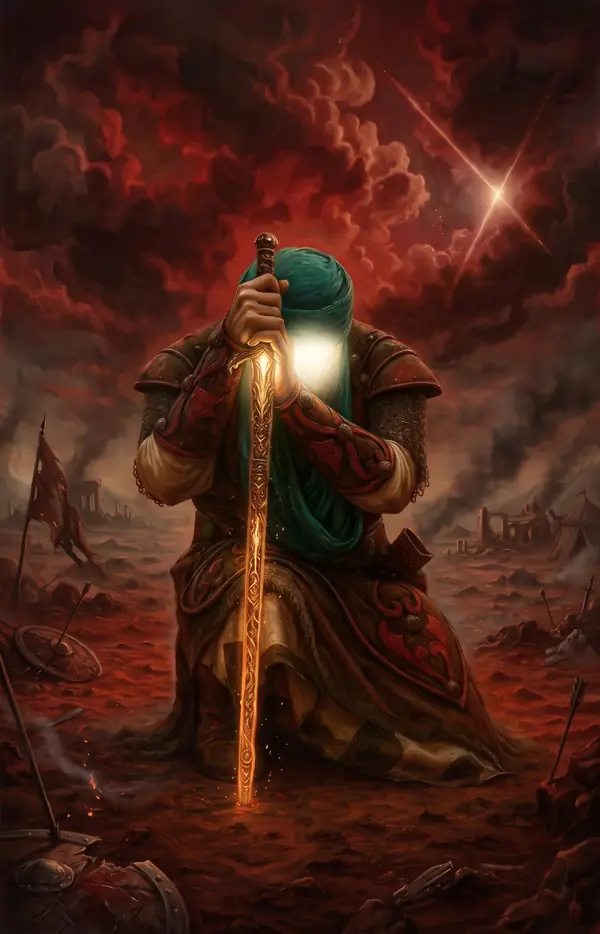
Worship to the last moment. The Imam asked for the night of Ashura so he could spend it in prayer, supplication and the Quran, "for Allah knows that I love prayer, the recitation of His Book and much supplication and seeking forgiveness" (al-Irshad). At midday he stopped in the middle of the battle to pray Zuhr. If the Imam did not give up his prayer under a rain of arrows, what excuse do we have on an ordinary day? Our step-by-step guide to how Shia Muslims pray is a good place to start for anyone learning.
Death with honour. On the way to Iraq the Imam told his companions: "I see death as nothing but happiness, and life with the oppressors as nothing but misery" (Tuhaf al-'Uqul). For a believer, martyrdom in the way of Allah is a meeting with Him: "Do not suppose those who were slain in the way of Allah to be dead; no, they are living and provided for near their Lord" (Quran 3:169).
The sanctity of Karbala. Imam al-Baqir (A.S.) said that Allah blessed and made holy the land of Karbala before He created the Ka'ba, and will make it the best place in Paradise, where His friends will live (Kamil al-Ziyarat, chapter 88, hadith 3). The ground where the Imam's blood fell became one of the holiest places on earth. Its soil, the turbah, is what millions of Shia Muslims rest their foreheads on in every sajdah.
What We Learn from Karbala
We weep for Karbala, and we also learn from it. These are some of the lessons the Imams and our scholars draw from it, and the ones Shia parents most often try to pass on to their children.
- The truth does not depend on numbersSeventy-two stood against thousands. How many people are on your side does not decide whether you are right.
- Never give allegiance to injustice"One like me does not pledge allegiance to one like him." A believer does not lend his name to what Allah has forbidden, whatever it costs him.
- Prayer is never abandonedThe Zuhr prayer of Ashura, said under a rain of arrows, is the strongest reminder that nothing excuses us from salah.
- Obey the Imam of your timeHazrat Abbas wanted to fight and was sent for water instead, and he went. Real loyalty does what the Imam asks, not what we would choose.
- Loyalty is a free choiceOn the night of Ashura the Imam released everyone. Those who stayed chose Allah with their eyes open.
- The door of repentance is openHurr made the worst mistake of his life, and one morning's repentance made him a martyr of Karbala.
- Good character even with enemiesThe Imam gave water to Hurr's soldiers and their horses, the same army that later kept water from his children.
- Women carry the messageWithout Lady Zainab's sermons and the patience of the women of the Ahlulbayt, the world might never have known what happened at Karbala.
- Faith, not tribe or colourAn old companion of the Prophet, a freed African slave and a young man who had been a Christian stood in the same line and earned the same honour.
- Young people can be heroesAli Akbar and Qasim were young. Faith and courage do not wait for old age.
Ziyarat Ashura and Its Reward
Ziyarat Ashura is the salutation to Imam Husain that Imam Muhammad al-Baqir (A.S.) taught his companion 'Alqama ibn Muhammad al-Hadrami, so that believers could greet the Imam on Ashura whether they were standing at his grave or living far away. Ibn Qulawayh records it in Kamil al-Ziyarat and Shaykh al-Tusi in Misbah al-Mutahajjid. In the narration, Imam al-Baqir first describes the reward for visiting the grave on Ashura and spending the night there weeping for him: the reward of 2,000,000 Hajj, 2,000,000 Umrah and 2,000,000 battles in the way of Allah, each like those performed with the Messenger of Allah and the Imams (Kamil al-Ziyarat, chapter 71, hadith 7).
'Alqama then asked about people in faraway lands who cannot reach the grave that day. The Imam told him they should go out to an open place or up to a high part of the house, send salaam to Imam Husain facing toward him, pray two rak'ahs, mourn and weep for him, tell their families to weep, hold a gathering at home to remember what happened to him, and console one another. He guaranteed that Allah would give them the same reward. When 'Alqama asked how believers should console each other, the Imam taught him these words:
أَعْظَمَ اللَّهُ أُجُورَنَا بِمُصَابِنَا بِالْحُسَيْنِ عَلَيْهِ السَّلَامُ، وَجَعَلَنَا وَإِيَّاكُمْ مِنَ الطَّالِبِينَ بِثَارِهِ مَعَ وَلِيِّهِ الْإِمَامِ الْمَهْدِيِّ مِنْ آلِ مُحَمَّدٍ عَلَيْهِمُ السَّلَامُ
"May Allah magnify our reward for our grief over Husain (A.S.), and make us and you among those who seek his revenge with his heir, the Imam al-Mahdi from the family of Muhammad (A.S.)."
Ibn Qulawayh, Kamil al-Ziyarat, chapter 71, hadith 7, narrated by 'Alqama ibn Muhammad al-Hadrami.Then he taught 'Alqama the words of the ziyarah and made him a promise: if you greet Husain from afar, pray two rak'ahs and recite this ziyarah, you have called on Allah with the words the angels use when they visit Husain. Allah will write 1,000,000 good deeds for you, erase 1,000,000 bad deeds, raise you 100,000,000 degrees, and count you among those martyred with Husain ibn Ali, sharing in their ranks (Kamil al-Ziyarat, chapter 71, hadith 7). The full text, in Arabic with transliteration, English and Urdu, is on our Ziyarat Ashura page, with the closing salaams and the sajdah.
You can recite it at any time of day. Many believers read it in the morning; others read it after a prayer or at night, whenever their heart is most present. Many read it every day of the first ten days of Muharram, and many make it part of every day of the year.
Other narrations in the same chapter say that Paradise is made obligatory for anyone who visits Imam Husain on the day of Ashura (chapter 71, hadith 2), and that whoever visits him that day knowing his right is like someone who visits Allah on His Throne (chapter 71, hadith 3). Scholars explain this as the highest closeness and honour, since Allah has no place or body.
The Reward of Visiting the Shrine of Imam Husain
Kamil al-Ziyarat was written in the fourth century AH by Ja'far ibn Muhammad ibn Qulawayh, the teacher of Shaykh al-Mufid. It has more than 60 chapters on visiting Imam Husain alone. A few of its narrations show how strongly the Imams encouraged it.
Abu Khadija asked Imam al-Sadiq about the ziyarah of the grave of Husain. He replied: "It is the best of deeds."
Ibn Qulawayh, Kamil al-Ziyarat, chapter 58, hadith 1.- ForgivenessImam Musa al-Kazim (A.S.) said Allah forgives all the past and future sins of whoever visits Husain knowing his right (chapter 54, hadith 1).
- Every step countsImam al-Sadiq said that for every step a pilgrim walks toward the grave, Allah writes a good deed and wipes away a bad one (chapter 49, hadith 1).
- The least of the rewardAsked what the smallest reward is, Imam al-Sadiq said Allah protects the pilgrim and his family until he gets home, and on the Day of Judgement Allah will be his protector (chapter 49, hadith 5).
- Sins left behindThe visitors of Husain, Imam al-Sadiq said, leave their sins at their door like a bridge they cross and leave behind (chapter 62, hadith 1).
- A duty of believersImam al-Baqir told his followers to command the Shia to visit the grave of Husain, because it is a duty on every believer who accepts that Husain is an Imam appointed by Allah (chapter 43, hadith 1). Scholars take this as a very strong encouragement for those who are able.
- Comfort for the grievingImam Husain said: "I am the martyr of tears. I was killed in anguish, and whoever comes to me in anguish, Allah will return him to his family with his heart at rest" (chapter 36, hadith 7).
"Knowing his right" ('arifan bi-haqqihi) comes up again and again in these narrations. It means recognising Imam Husain as an Imam appointed by Allah, whom we are obliged to obey, which is the heart of what Shia Muslims believe about Imamat. The reward is tied to that faith and to following him, more than to the journey itself. Pilgrims also perform the ziyarah of Hazrat Abbas (A.S.) at his own shrine close by, and of the martyrs buried with the Imam.
If you cannot travel, the Imams still left you a way. Imam al-Sadiq said: "If one of you lives far away and the distance between you and us is great, let him go up to the highest place in his house, pray two rak'ahs and point toward our graves with salaam, for it reaches us" (Kamil al-Ziyarat, chapter 96, hadith 1). After every prayer, many believers turn toward Karbala and say: Assalamu 'alayka ya Aba 'Abdillah, "Peace be upon you, O Aba Abdillah." Families going on to Madinah as well can use our Ziyarat guide for Madinah and Jannat al-Baqi.
Observing Muharram at Home
For Shia families in the UK, the USA, Canada, Australia and the Gulf, Muharram usually has to fit around school and work. Here are some simple ways to keep its first ten days, taken from what the Imams taught.
- Hold or attend a majlisImam al-Baqir told those far from Karbala to gather at home and remember what happened to Husain. A small family majlis counts.
- Recite Ziyarat AshuraAt whatever time suits you, on Ashura or any other day. Two rak'ahs before it and turning toward Karbala are recommended.
- Remember him when you drink waterSend salaam on Imam Husain and the thirsty of Karbala, and serve water or food to others in his name.
- Keep the season as a season of griefNo weddings, parties or celebrations from 1 Muharram to 28 Safar, and on Ashura go without food and water until the afternoon.
- Teach the childrenTell them the story at a level they can follow. Our Ashura timeline for children was written for exactly that, and we have more ideas for teaching Islam at home.
- Plan a ziyarahMake the intention, and pray, that Allah lets your family visit Karbala, for Ashura or for Arba'een.
Ashura 1449 AH is expected around Tuesday 15 June 2027, with 1 Muharram around 6 June 2027, according to the Umm al-Qura calendar. The actual dates depend on the moon, and Shia communities follow their Marja's announcement, so they may differ by a day.
If you would like your children, or yourself, to learn Ziyarat Ashura, what it means and the history of the Ahlulbayt (A.S.) with a teacher, our Ziaraat and Ahlulbayt course is taught one to one by Shia tutors. ShiaEdu is an online Shia Quran academy for families in the West and the Gulf, and the first trial class is free.
Monthly plans start at $30 for two days a week; you can compare all our monthly fees before you book.
- The Holy Quran 3:169 and 33:33.
- Ibn Qulawayh, Kamil al-Ziyarat: chapters 14 (hadith 1, 11), 16, 17, 32 (hadith 1, 2, 3, 5), 35, 36 (hadith 3, 7), 43 (hadith 1), 49 (hadith 1, 5), 54 (hadith 1), 58 (hadith 1), 62 (hadith 1), 71 (hadith 2, 3, 5, 7), 88 (hadith 3), 96 (hadith 1). Chapter numbers follow the English edition on Thaqalayn.
- Shaykh al-Saduq, al-Amali: Majlis 27 (hadith 2, 4, 5), Majlis 30, Majlis 31; 'Uyun Akhbar al-Ridha.
- Shaykh al-Mufid, al-Irshad, the account of Imam Husain (A.S.) from Madinah to Karbala and after.
- Sayyid Ibn Tawus, al-Luhuf 'ala Qatla al-Tufuf.
- Shaykh al-Tusi, Misbah al-Mutahajjid (Ziyarat Ashura; the day of Ashura) and Tahdhib al-Ahkam (the signs of the believer).
- Ibn Shu'ba al-Harrani, Tuhaf al-'Uqul; al-Tabrisi, al-Ihtijaj; Ibn Shahrashub, al-Manaqib; 'Imad al-Din al-Tabari, Bisharat al-Mustafa.
- Allama al-Majlisi, Bihar al-Anwar, volumes 44, 45 and 98.
- Sahih al-Bukhari, hadith 3753; Sunan al-Tirmidhi, hadith 3775 (graded hasan by Zubair Ali Za'i).
- Ibn Taymiyya, Majmu' al-Fatawa, volume 25, on the customs of the day of Ashura.
- Umm al-Qura calendar, for the expected date of Ashura 1449 AH.
Where reports differ on a detail or a number, we say so, and where a detail comes from the later books of maqtal, we name the book. This article was prepared for review by Maulana Muntaziri.
Frequently Asked Questions
What is Ashura?
Ashura is the tenth day of Muharram, the first month of the Islamic calendar. On this day in 61 AH (680 CE), Imam Husain (A.S.), the grandson of the Prophet Muhammad (S.A.W.W.), was martyred at Karbala with his family and companions. For Shia Muslims it is a day of mourning.
What happened at Karbala?
Imam Husain refused to pledge allegiance to Yazid. His small caravan was stopped at Karbala on 2 Muharram 61 AH, cut off from water from the 7th, and attacked on the 10th. About seventy-two companions and the men of his family were martyred, and then the Imam himself. The women and children were taken captive to Kufa and Damascus.
Why do Shia Muslims mourn on Ashura?
Because the Prophet and the Imams wept for Imam Husain and taught their followers to mourn him. Imam al-Ridha (A.S.) told al-Rayyan ibn Shabib that whoever weeps for Husain until his tears flow, Allah forgives his sins. Mourning also keeps the message of Karbala alive.
Do Shia Muslims fast on Ashura?
No. Fasting on Ashura is not a Shia practice. The Imams of the Ahlulbayt discouraged it, and most Shia jurists consider it disliked. Instead, Shia Muslims go without food and water until the afternoon as an act of grief, without the intention of fasting, and then break it with a little water. Check the details with your Marja'.
Do Shia Muslims hold weddings in Muharram?
No. Shia Muslims do not hold weddings or other celebrations in Muharram and Safar. The season of mourning runs from 1 Muharram to 28 Safar, the day of the passing of the Holy Prophet (S.A.W.W.) and the martyrdom of Imam Hasan (A.S.).
What is the reward of Ziyarat Ashura?
In Kamil al-Ziyarat, Imam al-Baqir (A.S.) told 'Alqama that whoever prays two rak'ahs and recites Ziyarat Ashura, even from far away, will have a million good deeds written for him, a million bad deeds erased, and be counted among those martyred with Imam Husain.
When is Ashura in 2027?
Ashura 1449 AH is expected around Tuesday 15 June 2027, according to the Umm al-Qura calendar. The exact date depends on the sighting of the moon and may differ by a day.
Related reading