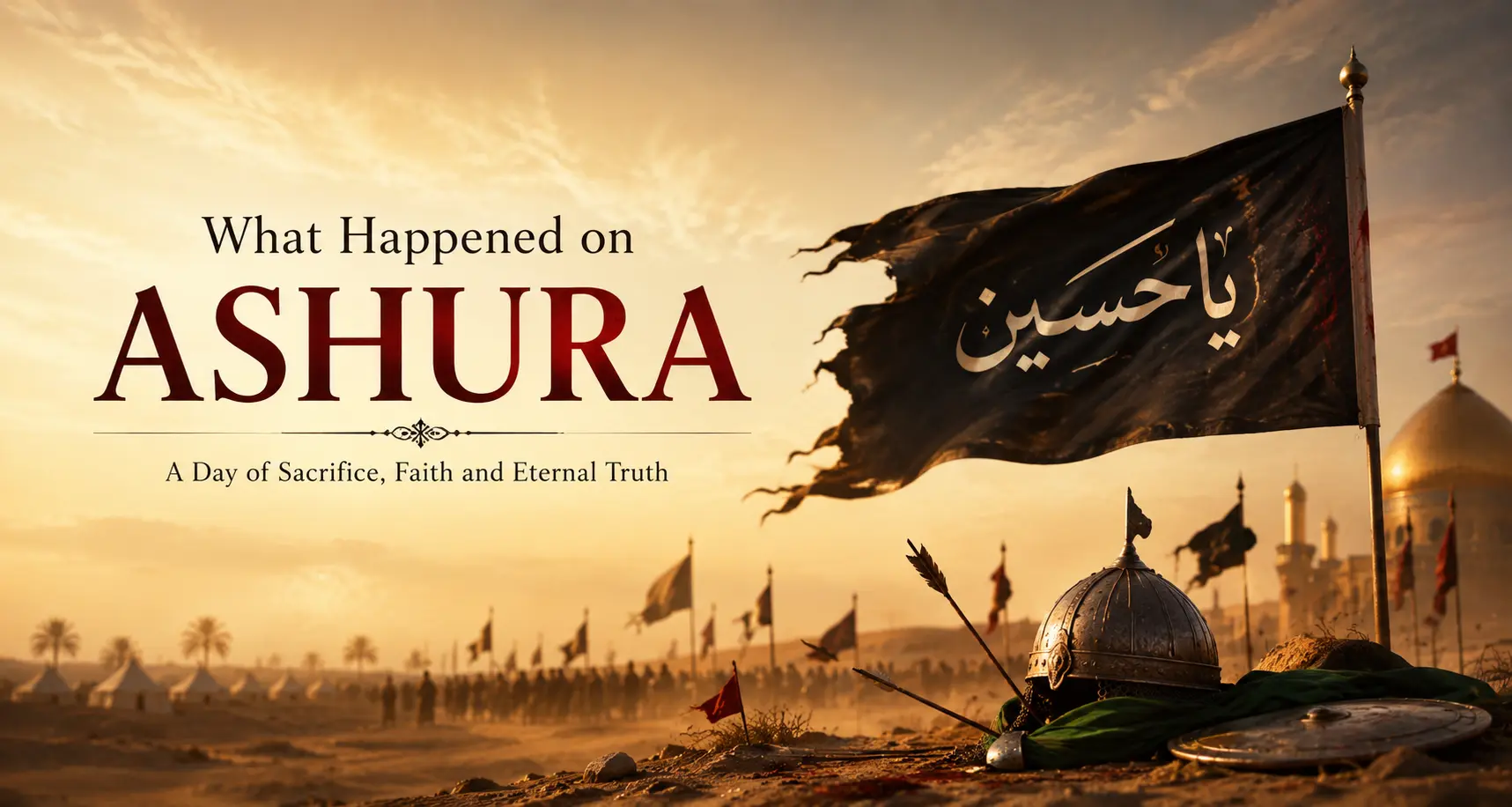
A few Muharrams ago, one of my students — she couldn't have been more than seven — tugged my sleeve during a Majlis and whispered, "But why do we cry for someone who died so long ago?" I didn't have a clever answer ready. I just told her the truth: because what happened to Imam Hussain (a.s.) still teaches us how to be brave, how to stand for what's right, and how to love the Prophet's family the way he loved them. She sat back down, quiet, and I remember thinking — this is exactly the conversation every parent ends up having, usually around the first of Muharram, usually with a child who wants the real story, not a watered-down version, but also not something too heavy for a young heart to carry.
That conversation is the reason this article exists. If you're a parent or a teacher trying to explain Ashura to a child in a way that's accurate, age-appropriate, and rooted in real hadith rather than assumption, you're in the right place. Let's walk through it together, day by day.
What Does "Ashura" Actually Mean?
The word Ashura comes from the Arabic root for "ten" (عشرة), and it refers to the 10th of Muharram, the first month of the Islamic calendar. For children, the simplest way to frame it is this: Ashura is the day Imam Hussain (a.s.), the grandson of Prophet Muhammad (s.a.w.), sacrificed his life and the lives of his family and companions in Karbala rather than give his allegiance to an unjust ruler — a refusal rooted in the same question of rightful leadership explored in our piece on Imamat vs Khilafat, and one that traces all the way back to the Prophet's own declaration at Eid al-Ghadir. But Ashura isn't just one day in isolation — it's the final chapter of a ten-day siege that began on the 1st of Muharram, 61 AH (680 CE), when Imam Hussain's caravan arrived at the plains of Karbala, in present-day Iraq.
Explaining this to a child works best as a story with a beginning, middle, and end — which is exactly why a day-by-day structure helps so much more than jumping straight to the 10th.
The Prophet Already Knew: Hadith on the Revelation of Karbala
This is the part many children (and honestly, many adults) don't realize: the tragedy of Karbala wasn't a surprise to the Prophet (s.a.w.). Several authentic narrations describe him receiving news of it through revelation, decades before it happened, while Imam Hussain (a.s.) was still a small child playing in his lap.
Narrated by Umm Salama (r.a.):
كان الحسن والحسين يلعبان بين يدي رسول الله صلى الله عليه وآله وسلم في بيتي، فنزل جبريل فقال: يا محمد، إن أمتك تقتل ابنك هذا من بعدك، وأومأ بيده إلى الحسين، فبكى رسول الله صلى الله عليه وآله وسلم وضمه إلى صدره
Kāna al-Ḥasanu wa'l-Ḥusaynu yal'abāni bayna yaday Rasūli-llāhi ṣallā-llāhu 'alayhi wa ālihi wa sallama fī baytī, fa-nazala Jibrīlu fa-qāla: Yā Muḥammad, inna ummataka taqtulu ibnaka hādhā min ba'dik, wa awma'a bi-yadihi ilā al-Ḥusayni, fa-bakā Rasūlu-llāhi ṣallā-llāhu 'alayhi wa ālihi wa sallama wa ḍammahu ilā ṣadrih.
Umm Salama narrates that Hasan and Hussain were playing in front of the Messenger of Allah in her house when Angel Jibra'il (Gabriel) descended and said, "O Muhammad, your nation will kill this son of yours after you," pointing to Hussain. The Prophet wept and held him close to his chest.
This single narration answers the question a child so often asks first: did the Prophet know? Yes — and his response wasn't anger or despair, it was grief expressed through tears, and love expressed by pulling his grandson closer, not further away.
What the Prophet's Hadith Tell Us
- Karbala was revealed decades early: Angel Jibra'il informed the Prophet while Hussain was still an infant, and the Prophet wept.
- He kept a piece of red soil: given to him by Jibra'il from a land called Karbala, entrusted to Umm Salama with the sign that it would turn to blood on the day of the martyrdom.
- He named the bond directly: "Hussain is from me, and I am from Hussain" — a statement transmitted by Shia and Sunni scholars alike for centuries.
A second well-known hadith describes the Prophet keeping this piece of red soil, telling him this was where Hussain would be martyred. Historical reports say that soil did darken on the day of Ashura — the same day the news reached Medina.
حُسينقٍ مِنِيْ وأَنَا مِنْ حُسيْنٍ ، أَحَبَّ اللّه مَنْ أَحَبّ حُسيْنَا
Ḥusaynun minnī wa anā min Ḥusayn, aḥabba-llāhu man aḥabba Ḥusaynā — "Hussain is from me, and I am from Hussain. Allah loves whoever loves Hussain."
For a child, this hadith is a gentle, powerful anchor — it tells them that loving Imam Hussain (a.s.) is not a separate devotion from loving the Prophet himself. They are, in the Prophet's own words, one and the same love. This bond is part of a larger truth children eventually grow to understand — that Imam Hussain (a.s.) is one of the 14 Masomeen, the Fourteen Infallibles whose lives form the backbone of everything ShiaEdu teaches in its Islamic Studies classes.
Why the Prophet Mourned Before It Happened
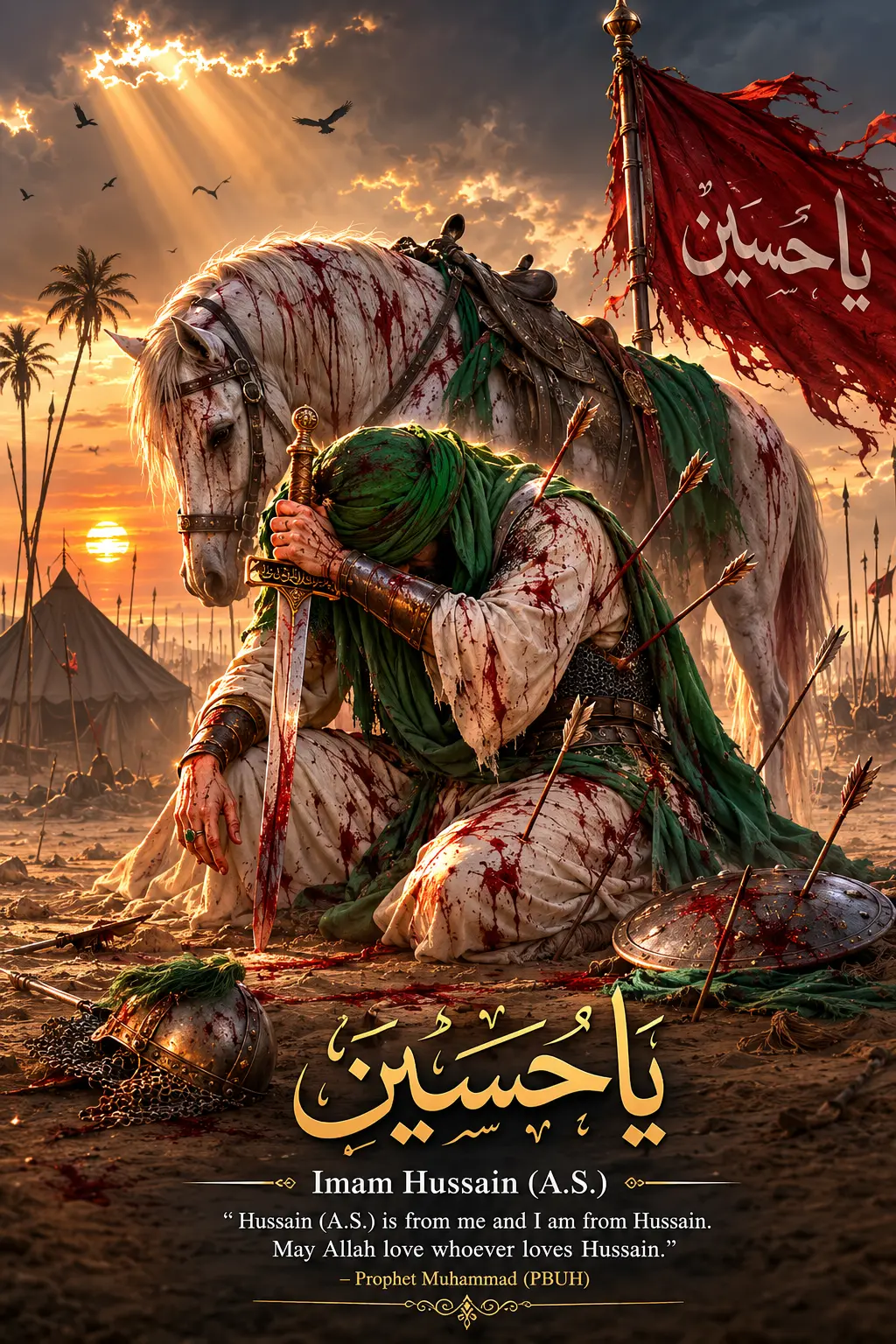
It can feel strange to a young mind that the Prophet (s.a.w.) mourned an event that hadn't occurred yet. But this is where an important lesson lives: grief in Islam isn't only a reaction to loss — it can also be an expression of love and awareness of sacrifice. The Prophet's tears over baby Hussain were not despair; they were the tears of someone who understood the weight of what his grandson would one day carry for the sake of truth. Many scholars note that his sorrow, expressed decades in advance, is part of why the mourning of Muharram continues today — it began, in a sense, with the Prophet himself.
The Day-by-Day Timeline of Ashura for Children
Here is the version I actually use with students, broken into simple, sequential days so a child can follow it like a story rather than a list of facts.
| Day | What Happened |
|---|---|
| 1st Muharram | Arrival at Karbala. Imam Hussain (a.s.), his family, and about 72 companions arrive at the dry, open land of Karbala. They are stopped and surrounded by an army sent by Yazid's governor. |
| 2nd–6th Muharram | The siege tightens. More soldiers arrive daily until Imam Hussain's small camp is surrounded by thousands. Negotiations happen, but Imam Hussain refuses to pledge allegiance to an unjust ruler, because doing so would mean accepting injustice as normal. |
| 7th Muharram | Water is cut off. The enemy blocks access to the Euphrates River. From this day, the children and elders in the camp begin to suffer from thirst — a detail that resonates deeply with young learners, because it makes the injustice tangible. |
| 9th Muharram (Tasu'a) | The final night. Imam Hussain gathers his companions and gives them the choice to leave under cover of darkness, since he knows what the next day holds. Every single one chooses to stay. This night is remembered for its loyalty and quiet courage. |
| 10th Muharram (Ashura) | The battle and martyrdom. At dawn, Imam Hussain leads the Fajr prayer with his loyal companions, then the battle begins. One by one, his companions and family members — including his young nephew Qasim and his infant son Ali Asghar — are martyred defending truth. By the afternoon, Imam Hussain himself is martyred, becoming the final sacrifice of the day. |
| After Ashura | The women and children survive. Hazrat Zainab (s.a.), Imam Hussain's sister, and the surviving family, including the ill Imam Zain-ul-Abideen (a.s.), are taken captive and marched to Kufa and then Damascus — where Zainab's own courage and speeches ensure the story of Karbala is never forgotten. |
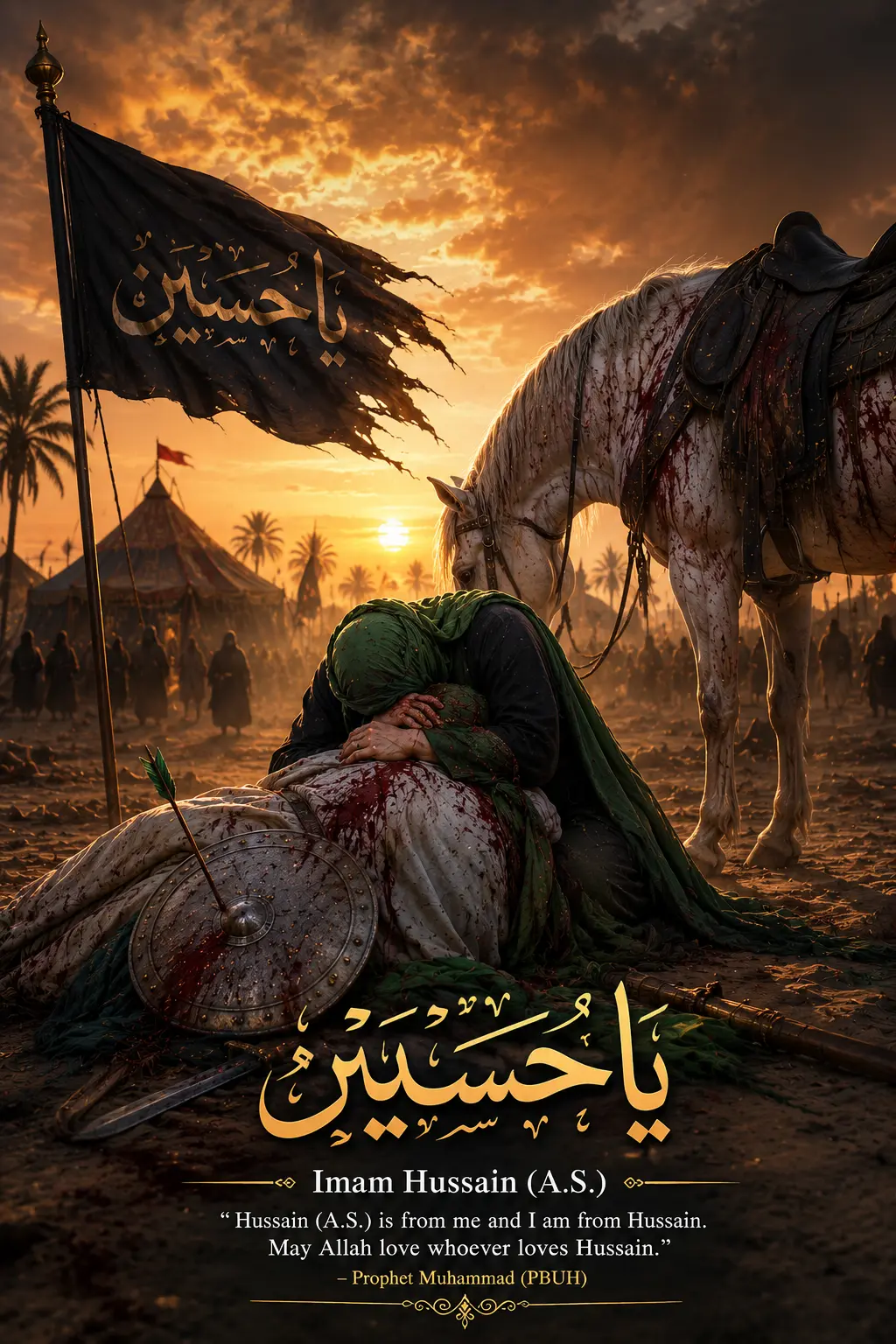
That same structure — the Fajr prayer at dawn, described step by step in our guide on how to perform Shia Namaz — is what Imam Hussain (a.s.) and his companions completed one final time before the battle began, a detail worth pausing on with older children, since it's a prayer they may already be learning themselves.
Framing the story this way — a countdown of ten days rather than one single battle — helps children understand that Ashura was the culmination of patience, warning, and choice, not a sudden, isolated tragedy.
Why This Story Still Matters in a Child's Daily Life
Children don't just need to know Karbala happened; they need to see how it applies now. The same devotion that later draws grown believers toward journeys like an Umrah undertaken in Imam Hussain's spirit begins right here, in these small, everyday lessons of sabr and standing for truth. A few simple takeaways I share with families:
- Standing for what's right, even when it's hard — just as Imam Hussain refused to accept injustice, children can learn to speak up against unfairness at school or with friends.
- Loyalty and friendship — the companions who chose to stay on the 9th of Muharram model what real loyalty looks like.
- Patience through hardship — the thirst endured in the camp teaches children that patience (sabr) is a practiced virtue, not something that arrives automatically.
- Remembering through mourning — wearing black, attending Majlis, or reciting a simple noha with your child are ways of keeping that memory alive without needing to explain every graphic detail too early.
If you'd like a more structured way to walk your child through the deeper meaning of these events — the duas recited in Karbala, the Ziyarat of Imam Hussain, and the spiritual lessons behind Muharram — our Ziyarat & Duas course was built exactly for this, guiding children through the Arabic text, correct pronunciation, and meaning at a pace that suits their age. Many parents also pair it with what ShiaEdu's Islamic Studies programme actually covers, from the Prophet's time through Karbala and beyond.
Closing Thought
Namaz, fasting, and Ashura all ask the same quiet question of a believer: will you stand for truth even when it costs you something? Families across the USA and worldwide — many of them learning alongside our online Shia Quran classes for USA families — return to this story every Muharram, not because it grows less painful with repetition, but because it grows more meaningful, one honest conversation with a child at a time.
Frequently Asked Questions
At what age should I start telling my child about Ashura?
Most educators suggest starting around age 4–5 with a simple, gentle version focused on love, sacrifice, and standing for what's right, and gradually adding historical detail as the child grows older and starts asking more specific questions.
Is it appropriate for young children to attend Majlis or Azadari?
Yes, in age-appropriate settings. Many families bring children to shorter, child-focused Majlis gatherings where the emphasis is on the values of Karbala rather than graphic descriptions of the battle.
Why do Shia Muslims mourn for someone who died so long ago?
Because the Prophet himself mourned before it happened, and the mourning (aza) is understood as an act of loyalty to truth and to Ahlulbayt (a.s.), not simply a historical remembrance.
Did the Prophet Muhammad really know about Karbala in advance?
Yes — multiple hadith, including the narration from Umm Salama quoted above, describe Angel Jibra'il informing the Prophet of Hussain's martyrdom while Hussain was still a young child.
What is Tasu'a and how is it different from Ashura?
Tasu'a is the 9th of Muharram, the night before the battle, remembered for the loyalty of Imam Hussain's companions. Ashura is the 10th, the day of the battle and martyrdom itself.
How can I explain the thirst in Karbala to my child without frightening them?
Focus on the value being taught — patience and sacrifice — rather than the physical suffering itself. Comparing it to a moment your child has felt genuinely thirsty (after sports, for example) and asking them to imagine choosing patience anyway can build empathy without fear.