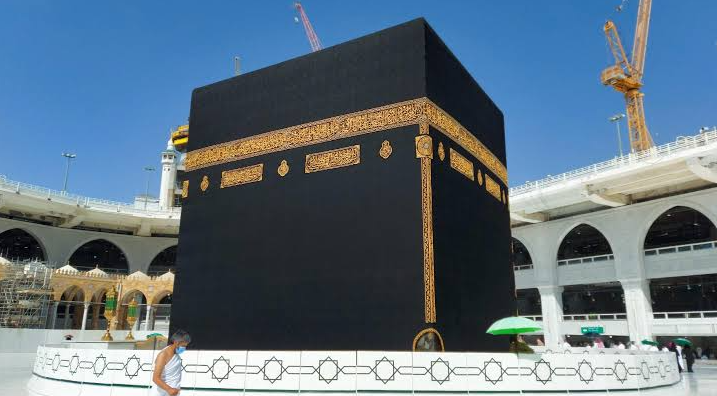
A voluntary journey undertaken with a pure intention and a clear spirit to the Holy Grand Mosque of Makkah is called the Umrah pilgrimage. Umrah is a non-compulsory but highly recommended act of worship that Muslims can perform at any time of the year except during the Hajj period. Its rituals closely mirror those of Hajj, and it offers immense spiritual purification and expiation from past sins.
Pilgrims travel to the central hub of Makkah to stand before Allah, who listens to every supplication, and to see the Holy House of Allah, draped in its black Kiswah. Muslims believe Umrah renews faith and brings sanctity through a deeper connection with Allah, and the Quran itself speaks directly to this act of worship.
وَأَتِمُّواْ ٱلۡحَجَّ وَٱلۡعُمۡرَةَ لِلَّهِۚ — "And complete the Hajj and Umrah for Allah." (Surah Al-Baqarah 2:196)
First-time Umrah travelers are usually eager to learn about its religious significance, the teachings of the Quran and Sunnah connected to it, and how to properly follow the example of the Prophet (s) in completing this beloved Sunnah. This guide walks through every stage of the journey — from booking your trip to the final Ziyarat in Medina — covering the religious, physical, and practical aspects a first-time pilgrim needs to know.
Booking Your Umrah Journey
First-time pilgrims are often unfamiliar with how the Umrah booking process actually works. Today, most of it is digitalized — your holy journey is just a click away. Pilgrims can visit Qiblatain UK to book Umrah or customize a package according to their preference, either through an agent or by filling out an application form directly on the website. Clients can customize the January Umrah packages and add services according to their own needs, choosing from a range of amenities:
- 3-star hotels (Jabal Al Omar Complex), 4-star hotels, and 5-star hotels (Abraj Al Bait, Clock Towers)
- Economy, business, and first-class cabins with top airlines
- VIP air-conditioned SUVs or shared bus transportation
- Umrah visa processing
Alongside the logistics, it's worth preparing spiritually before you travel. Reciting Tawaf duas and Quranic Ayat correctly means more once you understand what you are actually saying, which is one reason many pilgrims work through a short Quran with Tajweed refresher in the weeks before departure — it makes every recitation inside the Haram feel far more deliberate.
Making a Pure Intention for Umrah
A heartfelt commitment in the name of the Most Gracious, the Most Merciful Allah SWT marks the true start of the Umrah journey. Making a pure intention — Niyyah — to perform Umrah is a conscious decision to set off on this pilgrimage. Muslims form this inner intention before reaching the boundary point known as the Meeqat, and this Niyyah reflects the sincerity of the heart and mind, stripped of any desire for showing off or seeking attention. At the Meeqat, pilgrims recite "Labbayka Allahumma Umrah," followed by the Talbiyah.
Preparation and Packing for Umrah
Umrah travelers should begin their journey with proper preparation to avoid unnecessary inconvenience. Forgetting even a small item or document can cause real difficulty once you've arrived, so it's worth packing deliberately and early.
Umrah Packing Essentials
- Documents: A valid passport (at least 6 months validity), 2–3 passport-sized photographs, two-way Umrah flight and hotel reservations, and a vaccination certificate (Meningococcal Vaccine)
- Money: USD exchanged to SAR currency
- Clothing: 2-piece unstitched Ihram for men, Abaya/Hijab for women, comfortable and modest clothing, underwear/socks, comfortable slippers and footwear, and light jackets or sweaters
- Toiletries: Shampoo, soap, moisturizer, lotion, deodorant, fragrance-free hand sanitizer, sunscreen, lip balm, dental care, nail clippers, scissors to remove Ihram, wet wipes, tissues, and menstrual pads where needed
- Electronics: Power bank, universal adapter, and mobile phones
- Health: First-aid kit and any prescribed medications
- Religious items: A pocket Quran, dua book, prayer mat, and Tasbeeh (digital or traditional beads)
A pocket Quran is only as useful as your ability to read it comfortably in Makkah's crowded courtyards. If you're still building confidence with the Arabic script, many families use the months before travel to work through Yassarnal Quran (Qaida) — starting from the letters and building up to fluent reading — so that reciting Ayat during Tawaf feels natural rather than unfamiliar.
Boarding and Landing at the Airport
Pilgrims should be on time for departure and read all flight guidelines carefully to avoid inconvenience, aiming to arrive at the airport at least 1–2 hours early. Umrah pilgrims typically land at Jeddah, Medina, Riyadh, or Dammam, and are highly recommended to wear Ihram and make their pure intention once they cross the Meeqat boundary.
Before leaving home, pilgrims should be well aware of baggage allowances and should avoid exceeding the limits for checked and carry-on baggage. Prohibited items — sharp objects, knives, razors, tools, weapons, and lighters — should never be packed. It is recommended to keep valuables such as cameras, jewelry, electronics, laptops, and cash in hand-carry luggage.
Check-In at Your Hotel in Makkah
Once you land in Saudi Arabia, you will likely feel the spirituality in the air almost immediately. If you have booked Umrah packages UK with a reliable travel agency like Qiblatain, transportation included in the package will take you directly to your reserved hotel. Most pilgrims choose accommodation close to the Holy Haram. After arriving, check in, get refreshed, and rest if you're tired — or head straight to the courtyard of the Holy Kaaba for your Umrah worship if you feel ready.
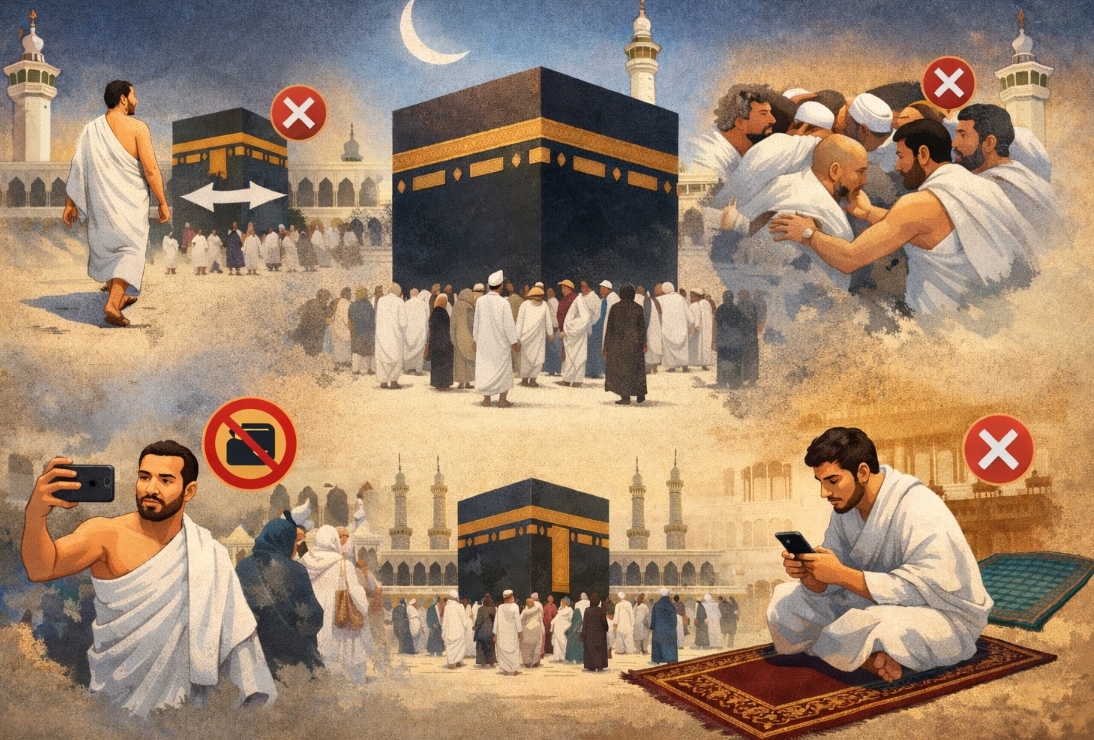
The Holy Worships in the Grand Mosque
Muslims travel far from home to perform the holy rituals of Umrah for the pleasure of Allah, believing that this struggle renews their faith, brings forgiveness from past sins, and draws them closer to their Creator.
Reciting Talbiyah
Pilgrims begin this holy worship with the words of the Talbiyah, affirming Tawheed and the creation's submission before its Creator. Muslims say that they are here to respond to Allah's call for worship, expressing praise and gratitude in words that build a deep, humble connection with Him.
Two Rak'at Prayer
It is Sunnah of our beloved Prophet (s) to offer two rak'at prayer at Maqam-e-Ibrahim after wearing Ihram for Umrah. Pilgrims offer two more rak'at at the same point after completing Tawaf around the Holy Kaaba.
Performing Tawaf Around the Kaaba
The central ritual of Umrah is the Tawaf — circling the Holy House of Allah out of love, affection, and submission. Tawaf begins from the point of the Black Stone, said to have arrived from Jannah and installed there by the Prophet (s), and concludes back at the same point. Pilgrims recite various Quranic Ayat, including Ayat Al-Kursi, along with duas that the Prophet (s) himself recited while performing Umrah. Understanding the meaning behind each Ayat recited here — rather than reciting by memory alone — is exactly why many pilgrims complete a Quran Translation course before they travel, so that every round of Tawaf carries real meaning.
Running Between Two Mountains: Sa'i
Pilgrims run or walk between two mountains according to their physical capability, some using a wheelchair, to complete seven rounds between Safa and Marwah.
Shaving or Trimming Hair
After completing Umrah, Muslims shave their head or trim their hair, signifying a fresh start and the shedding of past sins.
Ziyarat Visits to Medina
After completing the Umrah rituals in the Holy Haram, pilgrims often travel to the city of the Holy Prophet (s) for Rawdah visits and other Ziyarat. The major sites to visit in Medina include:
- Al Masjid An-Nabawi
- Jannat Al Baqi
- Masjid Quba
- Mount Uhud
- Masjid Al-Qiblatayn
- Masjid Ghamama
- Garden of Salman al-Farsi
- Well of Uthman ibn Affan
Closing Thought
Umrah is more than a journey — it is a return. From the moment of Niyyah at the Meeqat to the final Ziyarat in Medina, every step is designed to strip away distraction and bring the pilgrim closer to Allah. First-time pilgrims who prepare well — spiritually, physically, and practically — often say the experience reshapes how they understand their faith long after they return home.
Frequently Asked Questions
What is Umrah?
Umrah is a voluntary but highly recommended pilgrimage to the Holy Grand Mosque in Makkah that can be performed at any time of the year except during Hajj, offering spiritual purification and a renewal of faith.
What is Niyyah and when is it made?
Niyyah is the sincere inner intention to perform Umrah purely for the sake of Allah. It is made silently in the heart before or at the Meeqat, the designated boundary point, followed by reciting Talbiyah.
What are the main rituals of Umrah?
The core rituals are reciting Talbiyah, performing Tawaf around the Kaaba, offering two rak'at prayer at Maqam-e-Ibrahim, performing Sa'i between Safa and Marwah, and shaving or trimming the hair.
What items should I pack for Umrah?
Essentials include a valid passport, Umrah flight and hotel documents, vaccination certificate, Ihram or modest clothing, comfortable footwear, toiletries, and religious items such as a pocket Quran, dua book, and prayer mat.
What can pilgrims visit in Medina after Umrah?
After completing Umrah in Makkah, many pilgrims travel to Medina for Ziyarat, visiting sites such as Al Masjid An-Nabawi, Jannat Al Baqi, Masjid Quba, Mount Uhud, and Masjid Al-Qiblatayn.