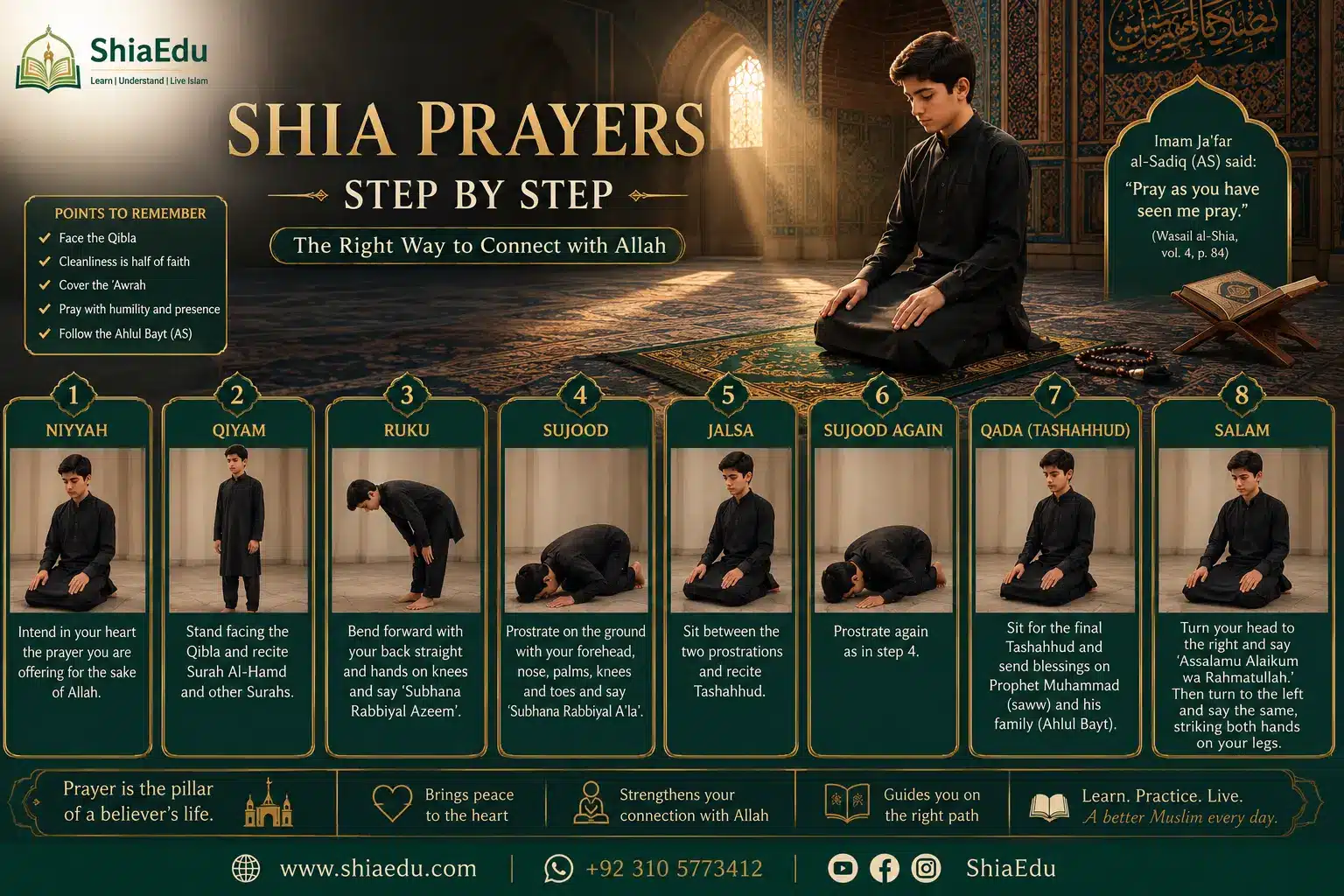
For every Shia Muslim, Namaz (Salah) is not just a ritual — it is a daily conversation with Allah. Five times a day, believers pause whatever they are doing, turn toward the Qibla, and stand before their Creator. It is the one act of worship that connects the ordinary rhythm of life — work, family, sleep, meals — with the eternal purpose of existence: remembering Allah.
Many new learners, reverts, and even lifelong practicing Muslims look for a clear, correct, step-by-step explanation of how Shia Namaz is actually performed — the exact Arabic wording, how to pronounce it, and what it means. Some of the same families who reach out to us for a Shia Namaz & Dua course tell us they simply want a reliable reference to return to between lessons.
This article walks through the entire structure of Shia Namaz according to Jaffari fiqh, from the Adhan and Iqamah to the final Tasleem, along with the Quranic verses and sayings of the Prophet (s) and the Ahlul Bayt that explain why prayer holds such a central place in a believer's life. Minor wording details can vary slightly depending on the marja' (religious authority) one follows, so readers are encouraged to confirm exact rulings with their own marja' for full precision — but the structure and wording given here reflect standard, widely accepted Shia practice.
Why Namaz Matters in Shia Islam
Allah did not leave the importance of prayer to guesswork. It is mentioned in the Quran more than any other act of worship.
"Indeed, prayer prohibits immorality and wrongdoing, and the remembrance of Allah is greater." (Surah Al-Ankabut 29:45)
"Indeed, I am Allah. There is no deity except Me, so worship Me and establish prayer for My remembrance." (Surah Ta-Ha 20:14)
"Prayer has been decreed upon the believers a decree of specified times." (Surah An-Nisa 4:103)
Namaz in the Words of the Prophet & Ahlul Bayt
- The Prophet Muhammad (s): "Namaz is the pillar of religion. If it is accepted, all other deeds are accepted, and if it is rejected, all other deeds are rejected."
- Imam Ali (a): taught that the first thing separating faith from disbelief is the abandonment of Salah.
- Imam Ja'far as-Sadiq (a): taught that the very first matter a servant is questioned about on the Day of Judgment is his prayer — if accepted, the rest of his deeds are examined with ease.
This is why Shia scholars often describe Namaz as a Mi'raj — a spiritual ascension — for the believer, a teaching woven through the broader Shia understanding of the Ahlul Bayt's role in preserving the din. It is the moment when a person deliberately steps out of worldly concerns and stands, however briefly, in the presence of the Divine.
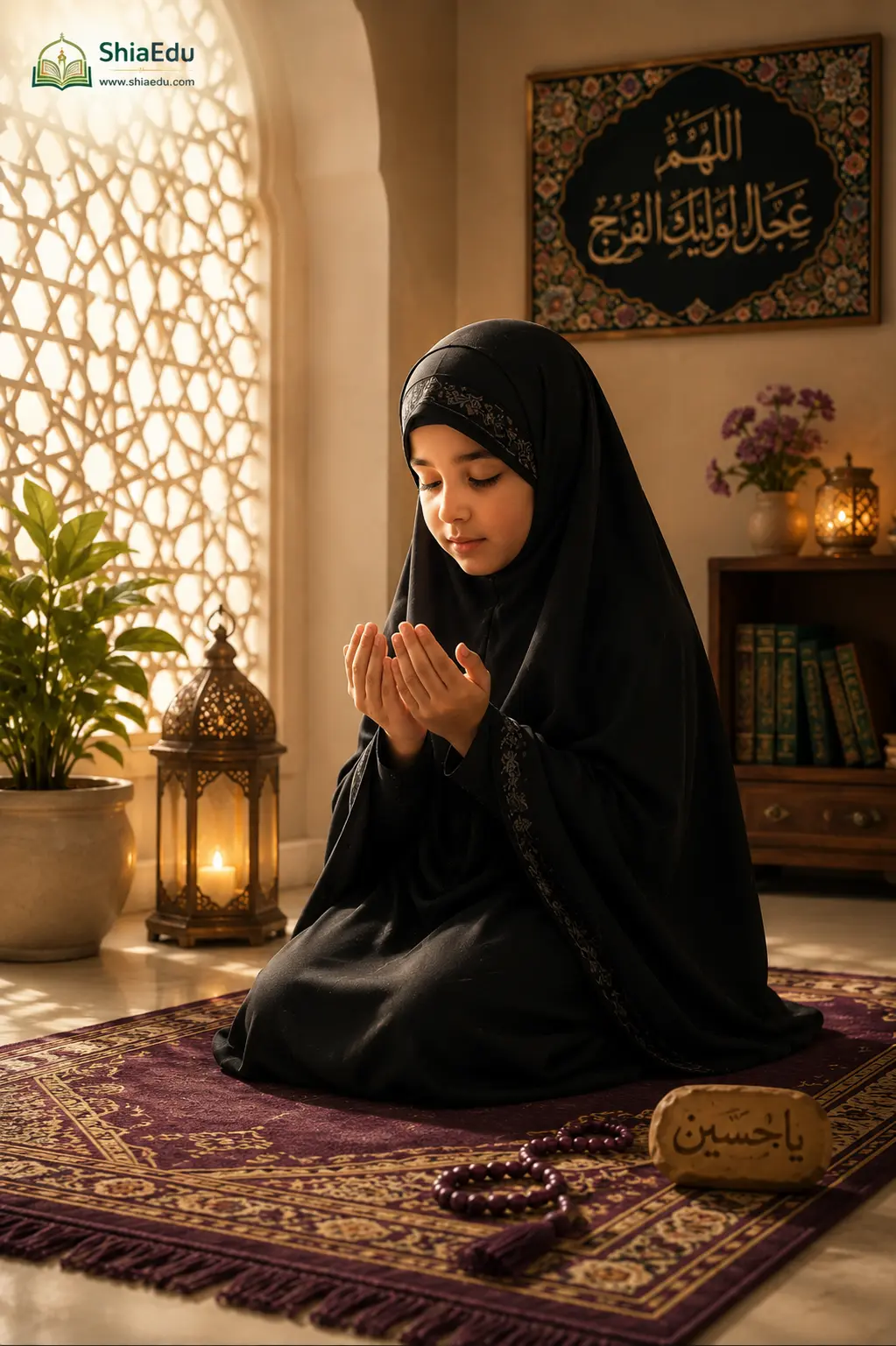
Before You Begin: Adhan and Iqamah
Before the obligatory prayer, it is highly recommended (mustahab) to recite the Adhan and Iqamah. The table below gives the Arabic, transliteration, and English and Urdu translations for each phrase.
Adhan (Call to Prayer)
| Arabic | Transliteration | English Translation | Urdu Translation |
|---|---|---|---|
| اللّٰهُ أَكْبَرُ (×4) | Allahu Akbar | Allah is the Greatest | اللہ سب سے بڑا ہے |
| أَشْهَدُ أَنْ لَا إِلٰهَ إِلَّا اللّٰهُ (×2) | Ashhadu an la ilaha illallah | I bear witness that there is no god but Allah | میں گواہی دیتا ہوں کہ اللہ کے سوا کوئی معبود نہیں |
| أَشْهَدُ أَنَّ مُحَمَّدًا رَسُولُ اللّٰهِ (×2) | Ashhadu anna Muhammadar Rasulullah | I bear witness that Muhammad is the Messenger of Allah | میں گواہی دیتا ہوں کہ محمد اللہ کے رسول ہیں |
| أَشْهَدُ أَنَّ عَلِيًّا وَلِيُّ اللّٰهِ (×2, mustahab) | Ashhadu anna Aliyyan Waliyullah | I bear witness that Ali is the Wali (guardian) of Allah | میں گواہی دیتا ہوں کہ علی اللہ کے ولی ہیں |
| حَيَّ عَلَى الصَّلَاةِ (×2) | Hayya 'alas-Salah | Hasten to prayer | نماز کی طرف جلدی آؤ |
| حَيَّ عَلَى الْفَلَاحِ (×2) | Hayya 'alal-Falah | Hasten to success | فلاح کی طرف جلدی آؤ |
| حَيَّ عَلَى خَيْرِ الْعَمَلِ (×2) | Hayya 'ala khayril-'Amal | Hasten to the best of deeds | بہترین عمل کی طرف جلدی آؤ |
| اللّٰهُ أَكْبَرُ (×2) | Allahu Akbar | Allah is the Greatest | اللہ سب سے بڑا ہے |
| لَا إِلٰهَ إِلَّا اللّٰهُ (×2) | La ilaha illallah | There is no god but Allah | اللہ کے سوا کوئی معبود نہیں |
Iqamah
Iqamah follows the same wording, recited generally once instead of twice for most phrases, with the addition of "Qad qamatis-Salah" (قَدْ قَامَتِ الصَّلَاةُ) — "Prayer has now begun" — repeated twice, just before the final Takbir.
The "Ashhadu anna Aliyyan Waliyullah" line is widely recited as a mustahab testimony to Imam Ali's wilayah, but it is not one of the core obligatory phrases of the Adhan — getting the pronunciation and sequence right matters more than any single optional line, which is exactly what structured Tajweed practice is built to help with.
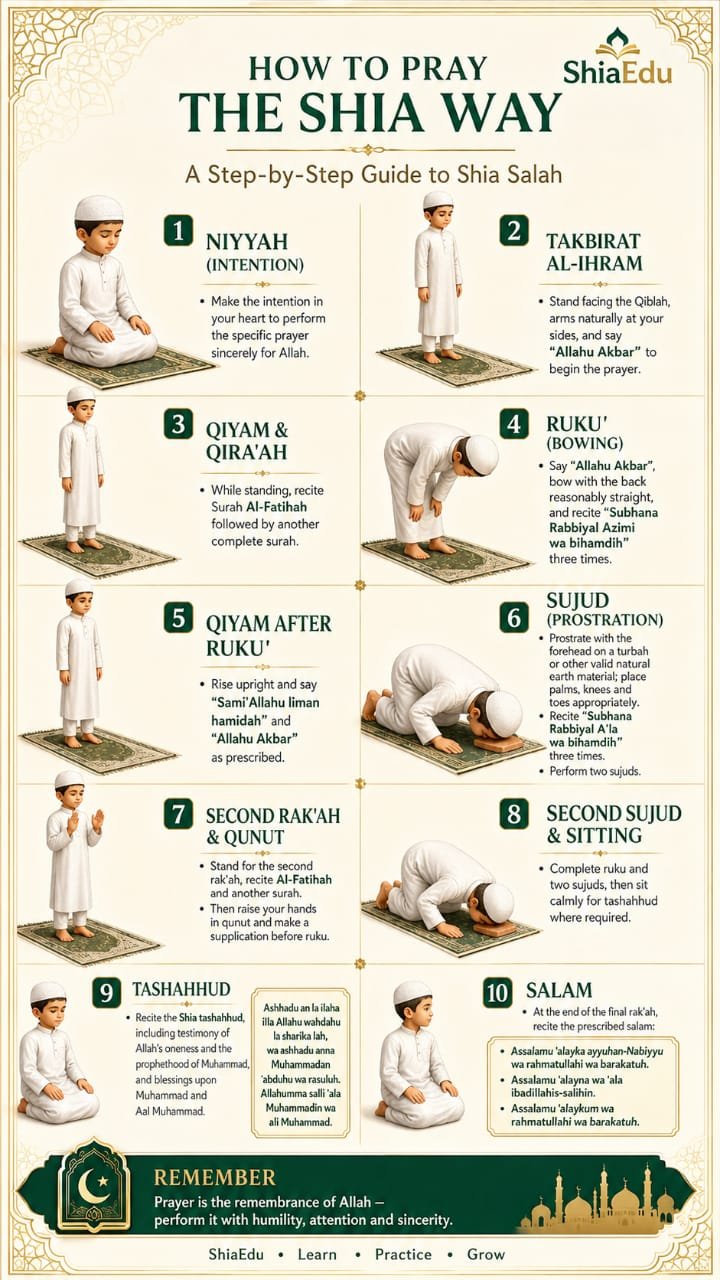
Niyyah and Takbiratul Ihram
Before saying the opening Takbir, the worshipper forms a silent intention in the heart — for example, intending to perform the obligatory Zuhr prayer, purely for the sake of Allah's nearness (Qurbatan ilallah). No specific wording is required; the intention is a matter of the heart, not the tongue.
Raise both hands to the ears and say: اللّٰهُ أَكْبَرُ — Allahu Akbar — "Allah is the Greatest" / "اللہ سب سے بڑا ہے". This Takbir formally begins the prayer; nothing worldly (talking, eating, unnecessary movement) is permitted after this point.
Qiyam: Standing and Recitation
While standing, recite Surah Al-Fatiha, followed by a complete additional surah — most commonly Surah Al-Ikhlas or Surah Al-Kawthar — in both the first and second rak'at.
Surah Al-Fatiha (سورة الفاتحة) begins with "Bismillahir-Rahmanir-Raheem" — "In the name of Allah, the Most Gracious, the Most Merciful" / "اللہ کے نام سے جو نہایت مہربان، رحم کرنے والا ہے" — and continues through its seven verses of praise and guidance. Getting comfortable with this recitation is usually the first real milestone for anyone starting with Yassarnal Quran (Qaida), and families learning together at home often find it easier with structured, one-on-one guidance rather than figuring it out alone.
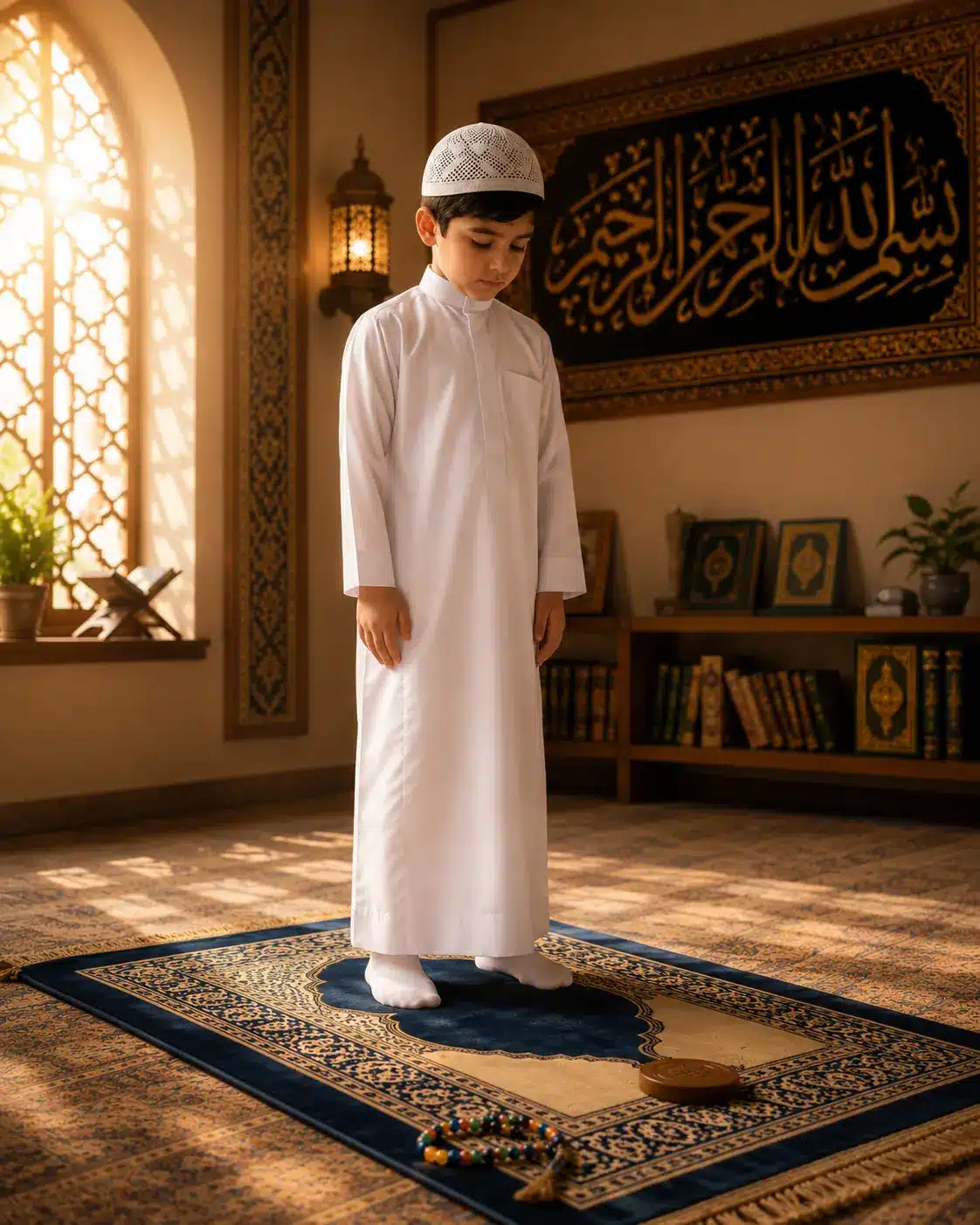
Ruku and Sujud
Ruku (Bowing)
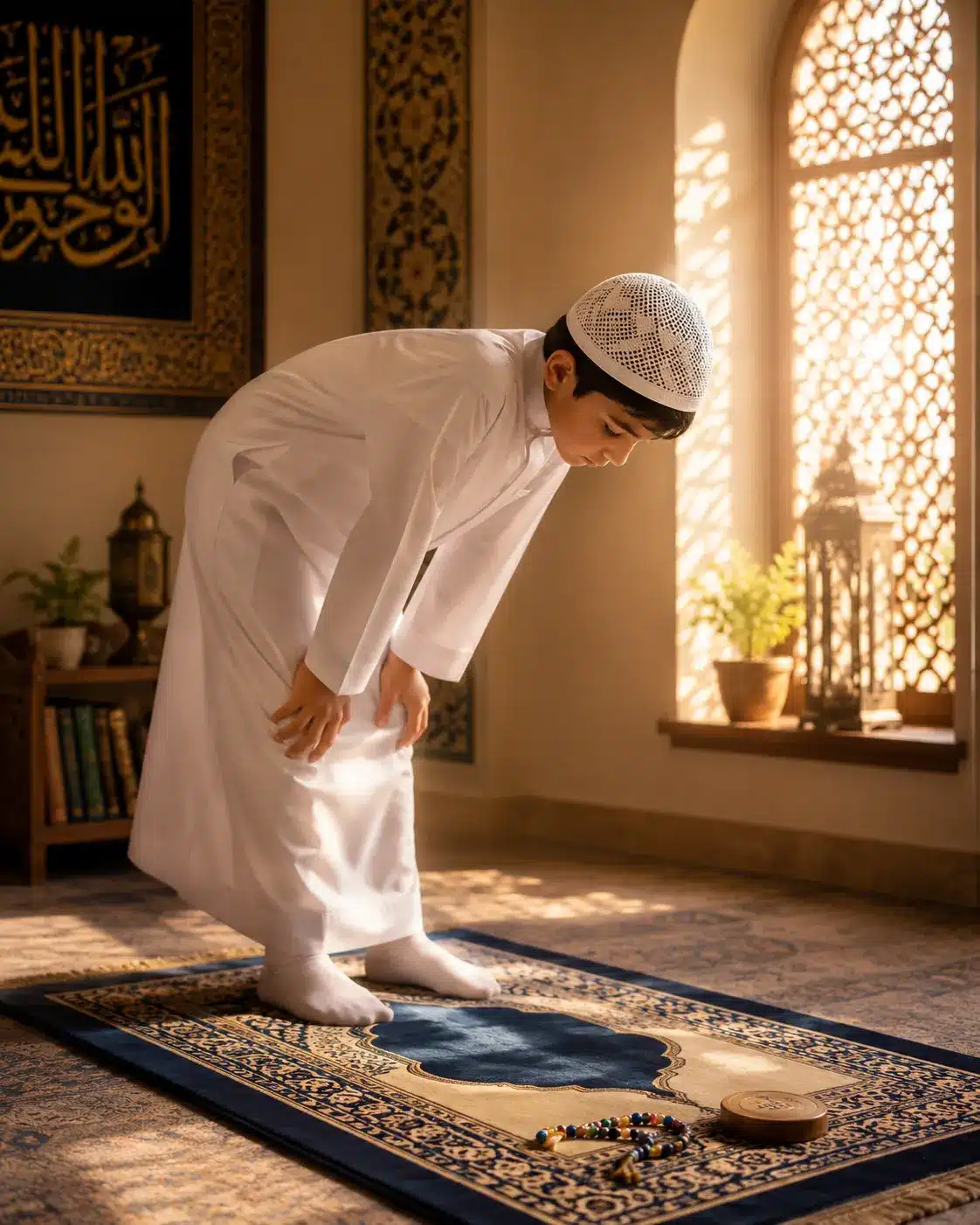
Bend forward until the hands reach the knees, and recite three times: سُبْحَانَ رَبِّيَ الْعَظِيمِ وَبِحَمْدِهِ — Subhana Rabbiyal 'Adheemi wa bihamdih — "Glory be to my Lord, the Magnificent, and praise be to Him" / "پاک ہے میرا رب جو عظمت والا ہے، اور اُسی کی حمد ہے".
Rising from Ruku
Stand fully upright and say: سَمِعَ اللّٰهُ لِمَنْ حَمِدَهُ — Sami'Allahu liman hamidah — "Allah hears whoever praises Him" / "اللہ سنتا ہے اس کی جو اس کی حمد کرتا ہے".
Sujud (Prostration)
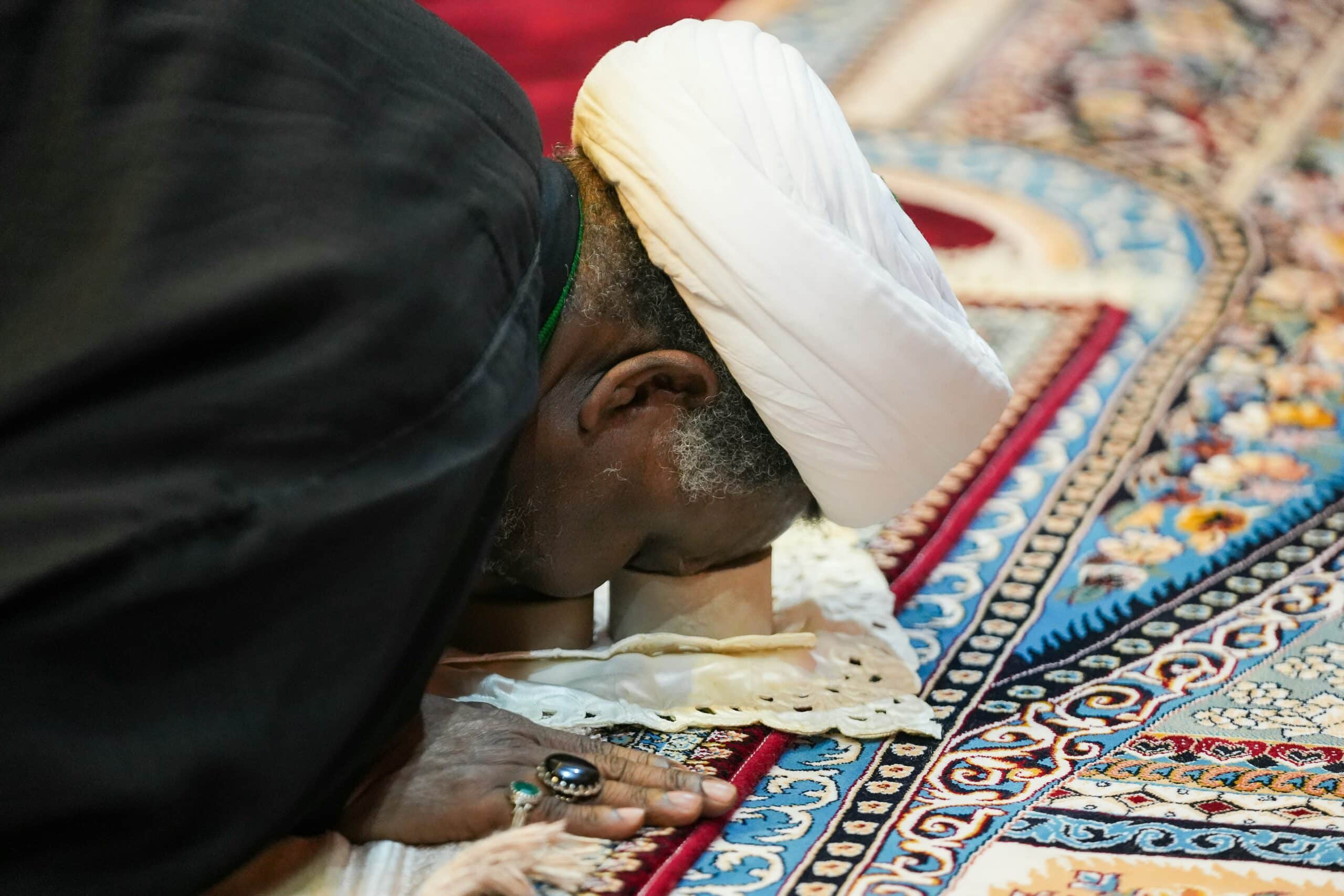
Prostrate on seven points (forehead, palms, knees, and toes) on a clean surface, ideally on a turbah (a small tablet of natural earth). Recite three times in each of the two prostrations: سُبْحَانَ رَبِّيَ الْأَعْلَى وَبِحَمْدِهِ — Subhana Rabbiyal A'la wa bihamdih — "Glory be to my Lord, the Most High, and praise be to Him" / "پاک ہے میرا رب جو سب سے بلند ہے، اور اُسی کی حمد ہے".
Between the two prostrations, sit briefly (Jalsa) and say: أَسْتَغْفِرُ اللّٰهَ رَبِّي وَأَتُوبُ إِلَيْهِ — Astaghfirullaha Rabbi wa atubu ilayh — "I seek forgiveness from Allah, my Lord, and I turn to Him in repentance" / "میں اپنے رب اللہ سے بخشش مانگتا ہوں اور اس کی طرف رجوع کرتا ہوں".
Tashahhud and Tasleem
After the Second Rak'at
Sit and recite: أَشْهَدُ أَنْ لَا إِلٰهَ إِلَّا اللّٰهُ وَحْدَهُ لَا شَرِيكَ لَهُ، وَأَشْهَدُ أَنَّ مُحَمَّدًا عَبْدُهُ وَرَسُولُهُ، اللّٰهُمَّ صَلِّ عَلَى مُحَمَّدٍ وَآلِ مُحَمَّدٍ — "I bear witness that there is no god but Allah alone, with no partner, and I bear witness that Muhammad is His servant and Messenger. O Allah, send blessings upon Muhammad and the family of Muhammad" / "میں گواہی دیتا ہوں کہ اللہ کے سوا کوئی معبود نہیں، وہ اکیلا ہے، اُس کا کوئی شریک نہیں، اور میں گواہی دیتا ہوں کہ محمد اُس کے بندے اور رسول ہیں۔ اے اللہ، محمد اور آلِ محمد پر رحمت نازل فرما۔"
If it is a two-rak'at prayer (like Fajr), Tasleem follows immediately. Otherwise, stand up for the third rak'at — this closing salutation upon "Muhammad and the family of Muhammad" is itself a small daily reminder of why ShiaEdu spends so much time on the 14 Masomeen (A.S.) in its Islamic Studies curriculum.
Third and Fourth Rak'at
Instead of Surah Al-Fatiha, the third and fourth rak'at are usually completed with the Tasbihat Arba'a (the Four Glorifications) — reciting it once is obligatory, though reciting it three times is recommended: سُبْحَانَ اللّٰهِ وَالْحَمْدُ لِلّٰهِ وَلَا إِلٰهَ إِلَّا اللّٰهُ وَاللّٰهُ أَكْبَرُ — "Glory be to Allah, praise be to Allah, there is no god but Allah, and Allah is the Greatest" / "اللہ پاک ہے، اور تمام تعریفیں اللہ کے لیے ہیں، اللہ کے سوا کوئی معبود نہیں، اور اللہ سب سے بڑا ہے". After this, Ruku and Sujud are performed exactly as in the earlier rak'at, with the same recitations.
Final Tashahhud and Tasleem
After the last prostration of the final rak'at, sit and repeat the Tashahhud, then add the Tasleem to conclude the prayer:
السَّلَامُ عَلَيْكَ أَيُّهَا النَّبِيُّ وَرَحْمَةُ اللّٰهِ وَبَرَكَاتُهُ — "Peace be upon you, O Prophet, and the mercy of Allah and His blessings"
السَّلَامُ عَلَيْنَا وَعَلَى عِبَادِ اللّٰهِ الصَّالِحِينَ — "Peace be upon us and upon the righteous servants of Allah"
السَّلَامُ عَلَيْكُمْ وَرَحْمَةُ اللّٰهِ وَبَرَكَاتُهُ — "Peace be upon you all, and the mercy of Allah and His blessings"
This final greeting formally closes the prayer.
Qunut and Recommended Duas
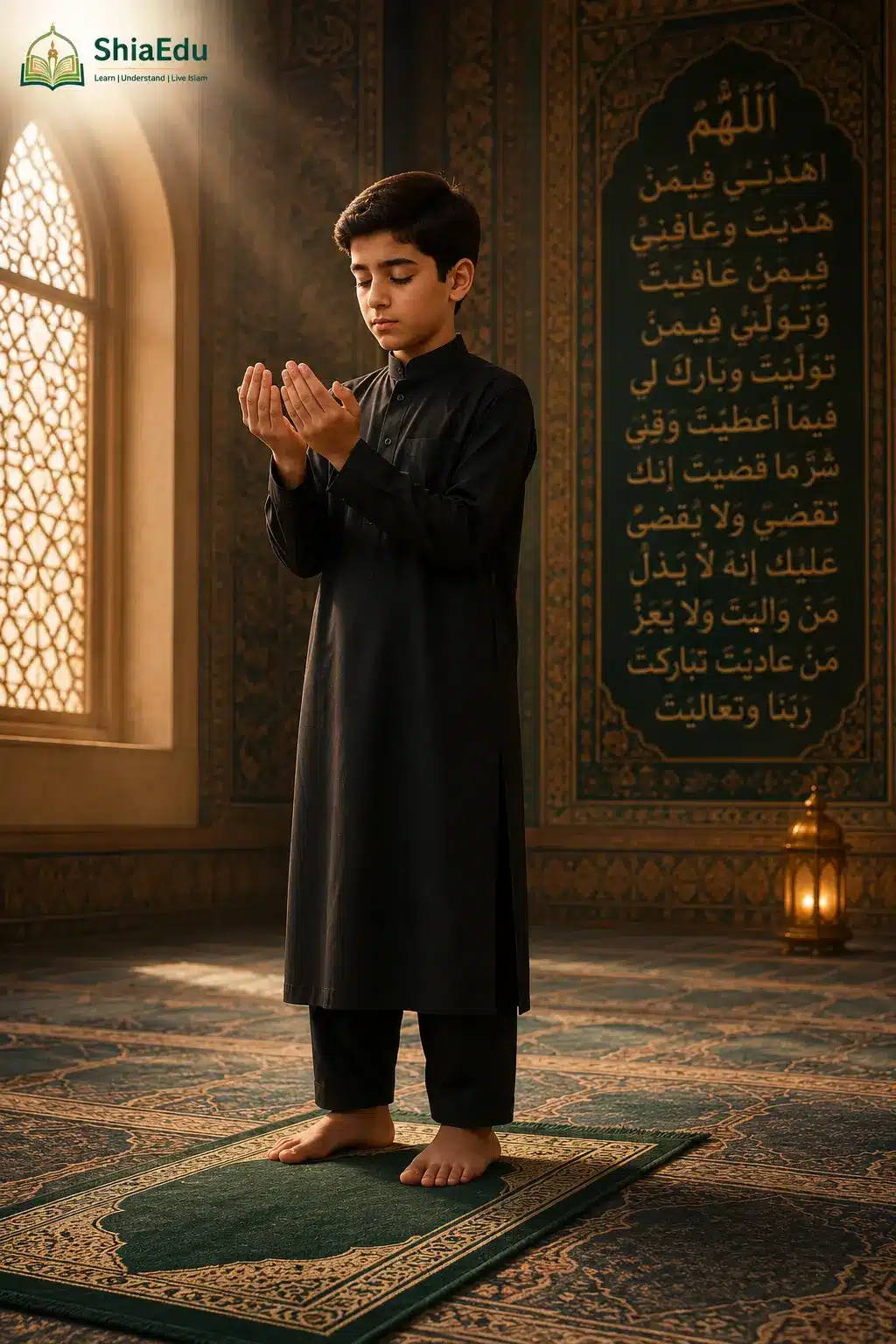
Qunut is recited in the second rak'at, just before going into Ruku, with both hands raised in front of the face, palms facing upward. It is one of the most beloved moments of the prayer — a personal, open space for supplication.
رَبَّنَا آتِنَا فِي الدُّنْيَا حَسَنَةً وَفِي الْآخِرَةِ حَسَنَةً وَقِنَا عَذَابَ النَّارِ — Rabbana atina fid-dunya hasanatan wa fil akhirati hasanatan wa qina 'adhaban-nar — "Our Lord, give us good in this world and good in the Hereafter, and protect us from the punishment of the Fire" / "اے ہمارے رب، ہمیں دنیا میں بھی بھلائی دے اور آخرت میں بھی بھلائی دے، اور ہمیں جہنم کے عذاب سے بچا"
لَا إِلٰهَ إِلَّا اللّٰهُ الْحَلِيمُ الْكَرِيمُ، لَا إِلٰهَ إِلَّا اللّٰهُ الْعَلِيُّ الْعَظِيمُ، سُبْحَانَ اللّٰهِ رَبِّ السَّمَاوَاتِ السَّبْعِ وَرَبِّ الْأَرَضِينَ السَّبْعِ — "There is no god but Allah, the Forbearing, the Generous; there is no god but Allah, the Exalted, the Magnificent. Glory be to Allah, Lord of the seven heavens and the seven earths" / "اللہ کے سوا کوئی معبود نہیں، وہ بردبار اور کریم ہے، اللہ کے سوا کوئی معبود نہیں، وہ بلند اور عظیم ہے، پاک ہے اللہ، ساتوں آسمانوں اور ساتوں زمینوں کا رب"
Before beginning the prayer altogether, it is recommended to recite Dua Iftitah, especially before the first prayer of the day or during Ramadan — a lengthy, beautiful supplication praising Allah and asking for acceptance of one's worship. It is worth learning gradually, even a portion at a time, ideally with a teacher who can correct pronunciation as you go rather than relying on guesswork about what actually matters when choosing a Quran teacher.
What Invalidates or Weakens Your Namaz
A valid, accepted prayer requires more than correct wording — it requires the right conditions and the right conduct. Some things invalidate the prayer outright; others are simply discouraged (makrooh) while the prayer technically remains valid.
✖ Invalidates the Prayer
- Praying without wudu, or in clothes/on a surface that is ritually impure (najasat)
- Deliberate speech unrelated to the prayer, or loud laughter
- Turning the chest away from the Qibla
- Excessive movement that makes a person appear no longer praying
- Eating or drinking during the prayer
- Delaying prayer beyond its time without a valid excuse
● Discouraged (Makrooh), Still Valid
- Praying in complete darkness, where one cannot see anything at all
- Praying in a noisy, chaotic environment that breaks concentration
- Praying while facing a mirror or a picture of a living being
- Praying while needing the bathroom, or while extremely sleepy or hungry
- Praying in the middle of a road where people are passing by
- Fidgeting out of restlessness, boredom, or distraction
Lack of presence of heart (Khushu) is not always invalidating, but praying in a rushed, distracted, or careless manner strips the prayer of its spiritual value — the Ahlul Bayt repeatedly warned against praying "like a chicken pecking at grain." Choosing a clean, calm, well-lit space, wearing comfortable and pure clothing, and setting aside a few unrushed minutes all help transform Namaz from a rushed obligation into what it was always meant to be — a genuine, focused meeting between the servant and their Lord.
Closing Thought
Namaz is a gift wrapped in discipline. Its outward form — the standing, bowing, and prostrating — is precise and unchanging, but its inward reality is deeply personal. Every Muslim who learns to perform it correctly, and then works toward performing it attentively, is walking the same path walked by the Prophet (s) and the Imams (a): the path of standing before Allah, five times a day, with humility and hope.
Frequently Asked Questions
What is the correct way to perform Shia Namaz?
Shia Namaz follows a fixed sequence: Adhan and Iqamah, Niyyah, Takbiratul Ihram, Qiyam with Surah Al-Fatiha and an additional surah, Ruku, Sujud, Tashahhud, and Tasleem. Two-rak'at prayers like Fajr end after the first Tashahhud, while three and four rak'at prayers continue with the Tasbihat Arba'a in the remaining units.
Do Shia Muslims say "Ashhadu anna Aliyyan Waliyullah" in the Adhan?
Many Shia Muslims recite this phrase as a mustahab, or recommended, addition to the Adhan, testifying to the wilayah of Imam Ali (A.S.). It is not considered one of the core, obligatory phrases of the Adhan itself, and practice can vary slightly by marja'.
What invalidates Shia Namaz?
Namaz is invalidated by praying without wudu or in an impure state, deliberately speaking or laughing, turning the chest away from the Qibla, excessive movement, eating or drinking during the prayer, and delaying the prayer beyond its valid time without a genuine excuse.
Can Qunut be recited in any language?
The well-known Qunut supplications are traditionally recited in Arabic, but a worshipper may also add personal dua within Qunut in their own language, since this portion of the prayer is an open, personal moment of supplication to Allah.
Why do Shia Muslims prostrate on a turbah?
A turbah is a small tablet of natural earth, often from Karbala, used so that Sujud is performed on the ground or something that grows from it rather than on woven or edible materials, following the practice of the Prophet (s) and the Ahlul Bayt.