Introduction
Growing up as a Shia Muslim child in the West comes with a beautiful but real challenge. Your child speaks English at school, thinks in English, and lives in a world that rarely explains what Fiqh Jafari is — let alone why it matters.
Yet this body of Islamic jurisprudence is not just a set of rules. It is the tested framework through which children can differentiate between Halal and Haram, learn the importance of worship and Duas, and understand their real identity — even while living in a country with no trace of Islamic culture and surroundings.
Without it, even a child who memorizes the Quran may struggle to navigate daily life as a practicing Shia Muslim. This is exactly why Shia Quran academies, online madrassas, and dedicated Islamic centers in the West are quietly doing some of the most important educational work of our time. ShiaEdu — Online Shia Seminary — is one of those actively working online Quran learning platforms.
What Is Fiqh Jafari, and Why Does It Stand Apart?
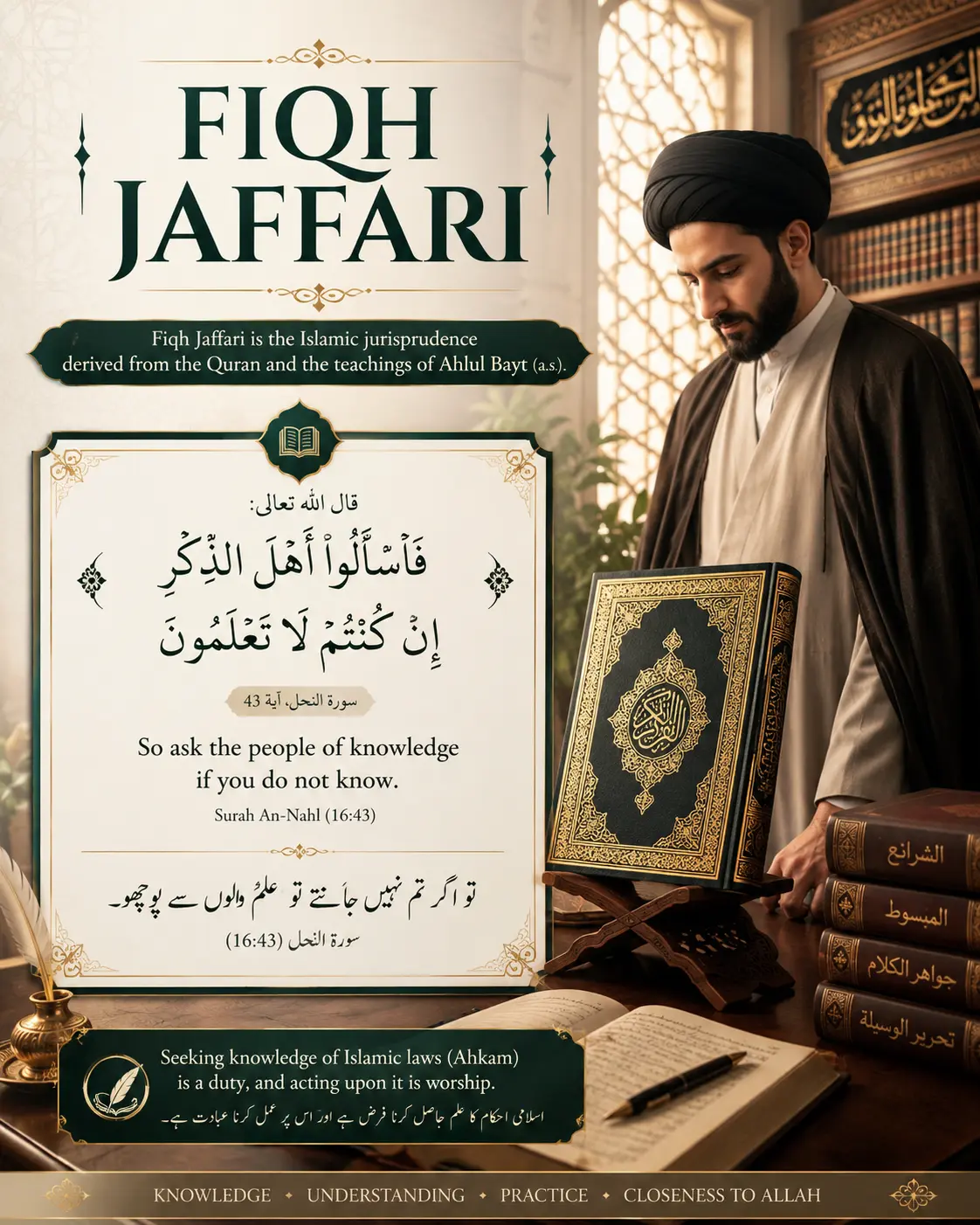
Jafari Fiqh pertains to the particular Islamic school of thought based on the doctrines of Imam Jafar al-Sadiq (AS), the sixth Imam of the Ahlul Bayt. This is the prominent school of thought followed by the Twelver Shias all around the world. The laws of Fiqh Jafari dictate everything ranging from Salah practice and Wudu requirements to ethical issues pertaining to business dealings, medical practices, and other aspects of social behavior.
The uniqueness of Fiqh Jafari lies in the continuous tradition of jurists called Marjaiyah — scholars of high repute. The practical book of such scholars is termed Risalah Amaliyyah. For a child in London, Toronto, or Houston, that guidance needs to be taught clearly, in a language they understand, by a teacher who knows both the tradition and the modern context.
Key Fiqh Jafari Terms to Know
- Marjaiyah
- The continuous tradition of senior Shia jurists whose rulings guide daily practice
- Risalah Amaliyyah
- The practical jurisprudence book issued by a Marja, covering everyday rulings
- Masail
- The specific rulings and practical questions answered within Fiqh Jafari
- Taharah
- The laws of ritual purity — one of the foundational chapters of Fiqh Jafari
- Shak
- Doubt in worship — a common area where children need grounded Fiqh knowledge
The Challenge Western Shia Families Face
Most Western cities do not have a Shia madrassa nearby. Even where Islamic centers exist, the quality of Fiqh education for children varies widely. Many parents — themselves raised in diaspora communities — feel under-equipped to teach the Masail themselves.
Children grow up knowing prayers phonetically but without understanding the fiqh behind them: why certain acts nullify the Salah, what the conditions of Ghusl are, or how to handle doubts in worship (Shak).
This gap becomes most dangerous during adolescence. A teenager without a grounded understanding of Fiqh Jafari has no internal compass when faced with questions about permissible food, halal earnings, marriage rulings, or the Islamic position on contemporary social issues.
How Online Shia Quran Academies Are Filling the Gap
The rise of dedicated online Shia Quran classes has been genuinely transformative. Families who live hours from the nearest Shia Islamic center can now enroll their children in structured programs taught by qualified Shia scholars and teachers.
A good online Shia madrassa does not just teach Quran recitation — it integrates Fiqh Jafari into the curriculum from an early age, teaching children the Why behind every act of worship.
Our Professional Shia Quran Madrassa Online Offers
- One-on-one classes with experienced Shia teachers who tailor lessons to the child's age and level
- Tajweed and Quran memorization grounded in proper recitation as per Shia tradition
- Fiqh Jafari modules covering Taharah (purity), Salah, Sawm, and the rulings children encounter in daily life
- Islamic studies drawing from the Ahlul Bayt's teachings, including Akhlaq and Aqeedah
- Flexible scheduling that works around school timetables in Western time zones
This combination means a child in a Western city can receive an education equivalent to — and in some cases better structured than — what a traditional madrassa in Pakistan, Iraq, or Iran would provide, because the online Shia Quran center actively accounts for the Western context its students live in.
Starting Early Makes All the Difference
Children absorb religious knowledge most naturally between the ages of five and twelve. When Fiqh Jafari is introduced alongside Quran learning at this stage — not as a separate burden but as the natural explanation for what they are already practicing — it becomes part of how they think, not just what they memorize.
A child who knows the significance of how Wudu should be done, understands the reasons behind the Adhan being the way it is, and knows why certain foods are prohibited will grow into a teenager and later an adult who believes wholeheartedly in what they are doing.
Picking the Perfect Shia Quran Academy for Your Child
If you want to enroll your child, ensure that the teacher chosen knows Fiqh Jafari as well as holding an ijazah in the recitation of the Quran, while providing an educational experience that progresses with your child's age — beginning with the basics of Masail and advancing over time, keeping parents informed throughout.
This small step will pay dividends for the rest of your child's life. Enroll your child today and give them the Islamic education they deserve — wherever in the world you are.